

TRIESTE – Venice is entering a new phase of environmental governance with the signing of the Pact for ecological restoration actions in the lagoon, developed under the European REST-COAST project and aimed at strengthening resilience and institutional coordination.
The document was signed today by the Venice Lagoon Authority, the North Adriatic Sea Port System Authority, CORILA and Fondazione CMCC. The goal is to structure stable cooperation between institutions, the scientific community and civil society to support environmental restoration policies over the medium to long term.
The Pact was created within the framework of the European REST-COAST project (Horizon 2020 – Green Deal) and aims to turn scientific results into operational governance tools. The proposed model is based on integration between technical-scientific expertise and decision-making responsibilities, continuous monitoring of the effects of interventions on biodiversity and ecosystem services, and ongoing engagement with civil society organisations brought together within the dedicated lagoon restoration forum.
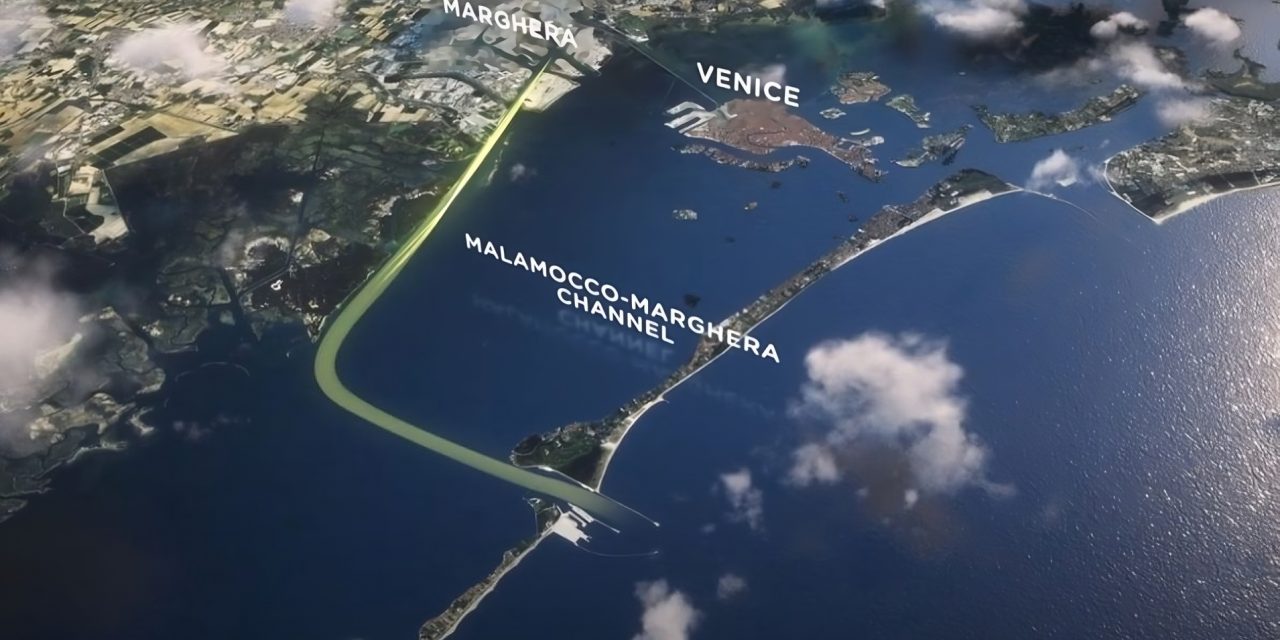
For Port Authority president Matteo Gasparato, environmental protection and port development are not alternative objectives. The maintenance dredging projects currently under environmental assessment, included in the so-called Channeling project, are indicated as tools to rebalance lagoon morphology: management of hydrodynamic flows, correct placement of sediments and the creation of morphological structures should reduce erosion and make navigable channels and the ecosystem compatible.
The president of the Lagoon Authority, Roberto Rossetto, pointed to the climate context and the role of MOSE, activated 151 times since 2020. He also highlighted issues that remain unresolved: seabed erosion, the spread of invasive alien species such as the blue crab and the sea walnut, and the risk of biodiversity loss. In this context, the Pact is presented as a foundation for a shared ecological strategy, supported by a new governance framework involving ministries, the Veneto Region, the Metropolitan City and the Municipality of Venice, as well as a technical committee and a scientific committee.