

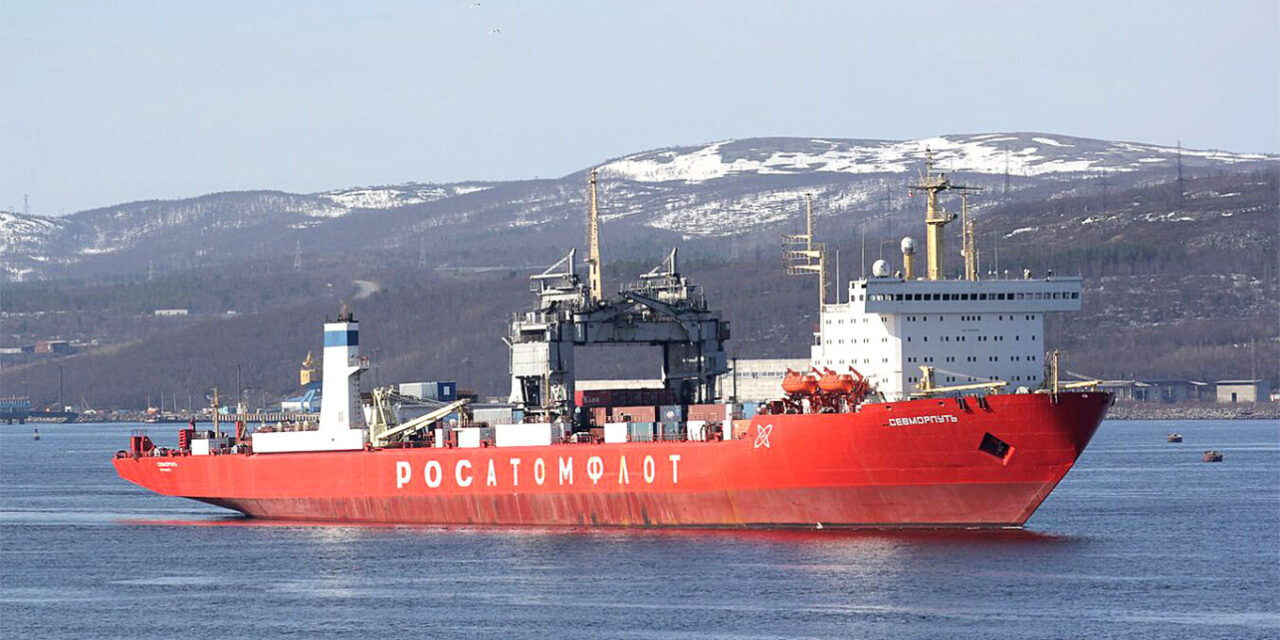
TRIESTE – The University of Trieste is also entering the debate on nuclear propulsion applied to merchant ships, with a study on a container ship powered by a small modular reactor.
A topic that until a few years ago seemed futuristic is now beginning to take concrete shape, driven by the need to reduce emissions from maritime transport and by the increasingly high costs linked to European environmental regulations.
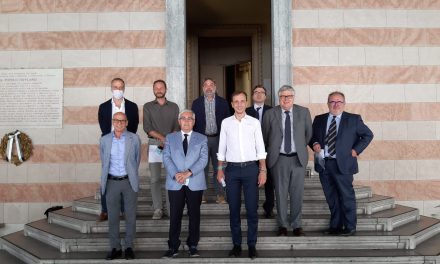
The subject was at the centre of a meeting organised by the International Propeller Club Port of Trieste entitled “Atomic propulsion for merchant ships: main advantages and critical issues”.
During the discussion, it emerged that the subject is no longer regarded as merely theoretical. Maritime transport handles more than 80% of world trade and is responsible for around 2-3% of global greenhouse gas emissions.
Regulatory pressure, from the IMO to the European ETS system, is therefore accelerating the search for alternatives to traditional fuels.
Professor Vittorio Bucci retraced the history of naval nuclear propulsion and technologies linked to SMRs, small modular reactors, stressing that Italy risks “missing the train” if it does not rapidly begin developing industrial and academic expertise in this field.
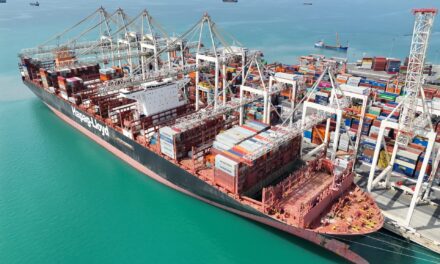
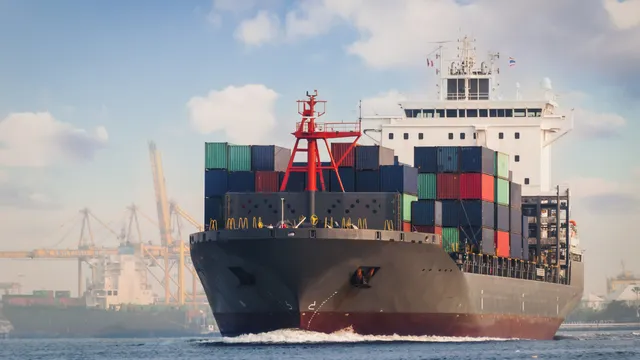
One of the most concrete contributions came from Professor Luca Braidotti, who presented a project developed within the University of Trieste for a nuclear-powered container ship. The study starts from an existing vessel, adapted to use a HolosGen reactor installed in a container and fuelled with Triso fuel, a solution considered among the most promising in terms of safety.
According to what emerged during the meeting, the main issue is no longer so much technological as regulatory. An international regulatory framework for nuclear ships already exists, but it is dated and not suited to new technologies or to today’s operational requirements.
Safety was also among the issues addressed. Ships of this kind would require highly specialised crews, dedicated procedures and redundant systems, with tighter operational constraints than current diesel propulsion systems.
Another sensitive point is social and political acceptability. «A nuclear container ship in an Italian port makes news», it was observed during the debate. For this reason, transparency, public communication and a clear political framework will be needed, along with the adaptation of port infrastructure and regulations for the management of safety and fuel.
Professor Giorgio Sulligoi, who has headed the Department of Engineering and Architecture since January, stressed that the academic world should not play politics on nuclear energy, but has the task of providing the cultural and technical tools needed to address the subject competently. In his speech, he recalled that Italian shipbuilding already has the industrial capabilities needed to take on this technological challenge, although the issue of managing the fuel supply chain remains open.