

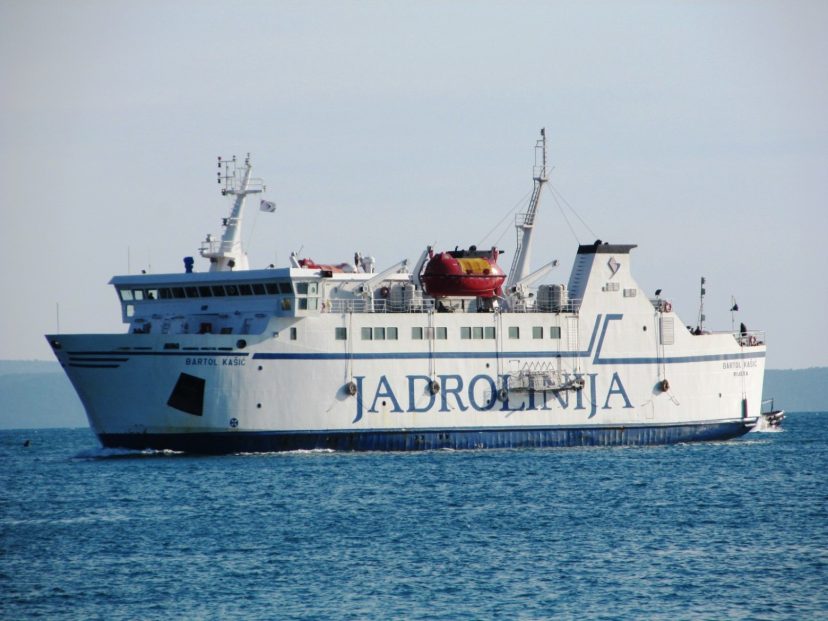
TRIESTE – Jadrolinija carried around 12.6 million passengers and 3.8 million vehicles in 2025, matching the previous record year and posting a 2% increase in car traffic. The figures were reported by Robert Blažinović, Chairman of the Board of the Croatian operator, who said that operating indicators and financial results point to stable demand for maritime links along the Adriatic coast.
The company, controlled by the Croatian state, has launched a broad investment cycle covering fleet renewal, operational safety and service digitalisation. The plan foresees the gradual phase-out of older units and their replacement with newer ships, more energy-efficient and with lower emissions. Jadrolinija’s fleet currently comprises 58 vessels with an average age of 27.8 years, below the European average of around 33 years. The company operates 40 routes—four international and 36 domestic—and employs about 1,935 people, a figure that rises by up to 10% during the tourist season. The programme includes the construction of up to ten new units, mostly ferries, as well as three new passenger ships.
Some projects will be financed with the company’s own resources, while others are expected to be supported by international financial institutions. Jadrolinija has in fact signed a mandate letter with the World Bank and the International Finance Corporation (IFC) to support the fleet’s green transition. The final financing terms and the total value of the investments are still being defined, but according to the company this will be the most important modernisation programme undertaken in recent years. According to Blažinović, fleet renewal is progressing along multiple tracks. Over the past seven years, the fast-vessel fleet has already been partially renewed with the introduction of six new catamarans.
At the same time, the company is gradually decommissioning some older vessels. The new ferries and passenger ships envisaged under the investment plan are expected to enter service over the next two years, depending on contracting and build timelines. In 2025, meanwhile, around 50% of Jadrolinija’s total departures were used for overhaul and maintenance work. On the safety front, the company has strengthened its organisational structure dedicated to this area, introducing new operational measures and training programmes for onboard staff. Particular attention is also being paid to cybersecurity: Jadrolinija is taking part in the European CYSCROMS project to strengthen cybersecurity in Croatian maritime transport and is aligning its procedures with national regulations.
Meanwhile, the company is preparing for the summer tourist season. Maintenance work is under way and timetables are being updated, with the aim of matching capacity to traffic needs during peak months. Among the innovations planned for 2026 is the introduction of an AI-based digital assistant to provide passengers with information on routes, schedules and fares. During the summer season, two new high-speed catamaran routes will also be launched: Split–Bol–Hvar–Vis and Zadar–Silba–Mali Lošinj, linking some of the main tourist destinations on the Croatian islands between June and September.