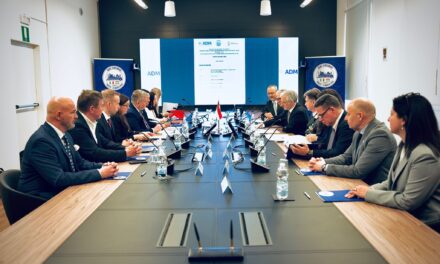


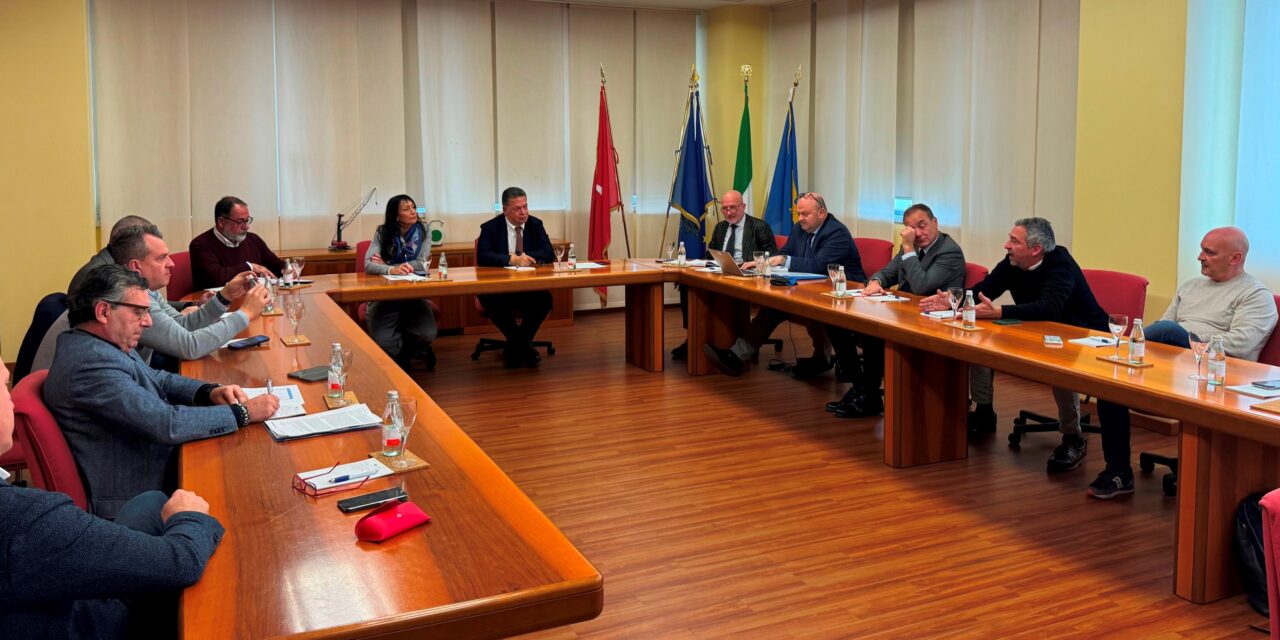
TRIESTE – At the Port of Monfalcone, a new structured consultation process is taking shape between the Port System Authority, operators and the local area: the first meeting took place between Authority President Marco Consalvo and terminal operators, promoted by MEP Anna Maria Cisint.
“The port is growing at a double-digit rate, but there are still issues that need to be resolved. That’s why we have launched the table with the terminal operators, also at their request,” Cisint said.
The meeting marks the start of a working group that, in the shared intentions, will become permanent. The aim is to make dialogue more stable and faster among all the port’s stakeholders, providing more certain answers to companies and workers.
“In agreement with President Consalvo we have launched a table that will become permanent in order to harmonise the dialogue among stakeholders and provide quicker and more certain responses to businesses and workers, a table that we will soon open to all actors. Priority attention to workers’ safety and health, which requires continued investment,” the MEP added, “to improve yard conditions, the quay and the development of infrastructure and services linked to the port, such as the railway both in terms of infrastructure development and the day-to-day management of needs, and then technical-nautical services, in particular the need for towage services and the need for more Guardia di Finanza officers.”
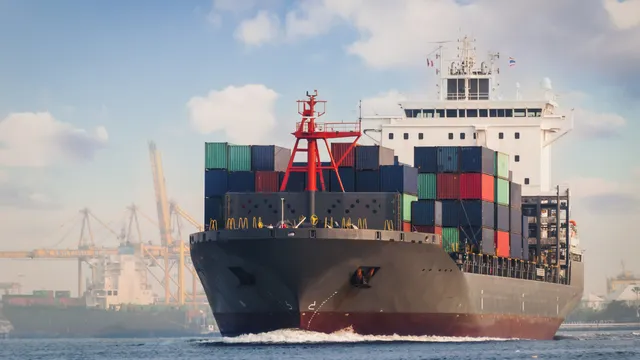
The talks come in a phase of strong growth for the port. International geopolitical dynamics have brought larger vessels to Monfalcone, with new operational needs compared to the past. This has boosted traffic, as shown by the positive 2025 figures, but has also made some long-standing issues more urgent.
For Cisint, the meeting was also an opportunity for a direct exchange with the new president on broader European issues linked to the strategic role of Upper Adriatic ports. “Which see the ports of Trieste and Monfalcone at the centre of new routes and as a gateway into Europe—challenges that must be addressed by the European Union without ideology, revisiting for example the entire ETS system, and from which our whole Region can benefit, by strengthening our economic and social fabric,” Cisint concluded.