

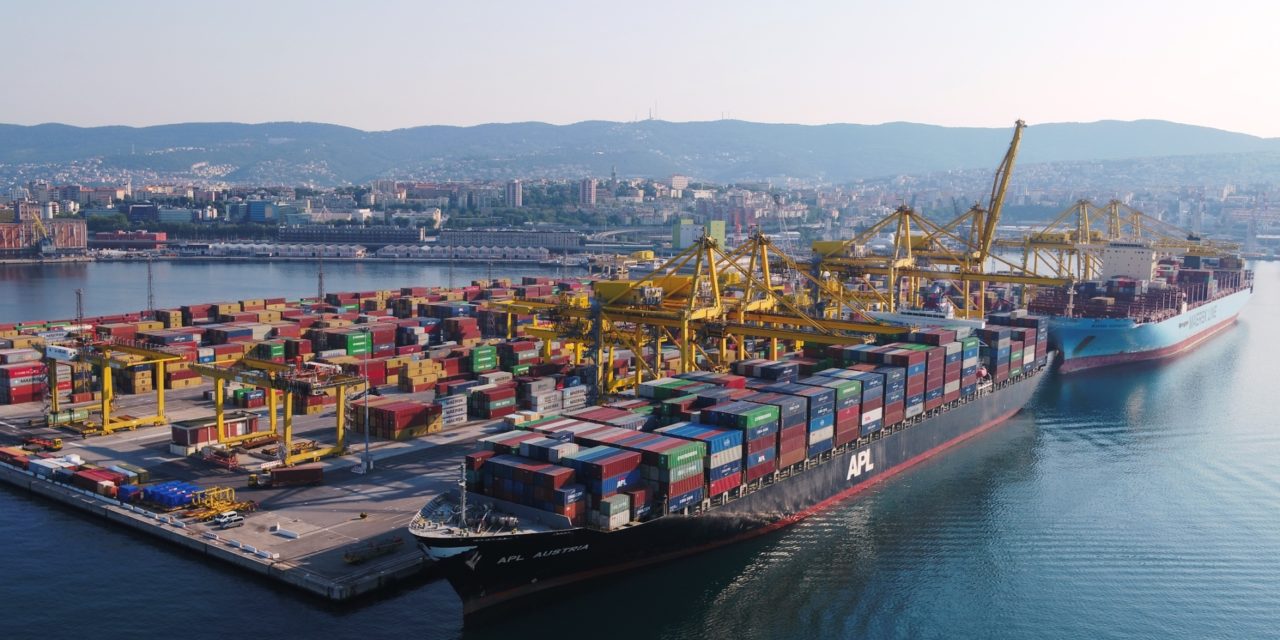
TRIESTE – Reviving the issue of the extraterritorial customs status of the Port of Trieste, established by post-war international treaties but never implemented.
This was the appeal made in recent days in Naples, during a public event, by Tommaso Foti, Minister for European Affairs, the South, Cohesion Policies, and the NRRP. “We need to take up the issue of the Port of Trieste again, and we must revive the topic of the extraterritorial customs regime provided for by the peace agreements after World War II. Genoa might feel disadvantaged, but we must focus on those port systems that are key nodes for the logistics of the future, such as Trieste,” Foti said.
The Minister went on to elaborate, emphasizing that logistics is not just a collection of warehouses and forklifts operated by low-skilled labor, and highlighting the need for increasingly high levels of qualification and leadership in innovation.
The issue of the territorial extraterritoriality of the International Free Port of Friuli Venezia Giulia, after years of relative dormancy, strongly resurfaced in 2021, gaining bipartisan political support. Port operators, workers, and the Port Authority had requested recognition of this status to establish manufacturing industries.
The Senate’s EU Policy Committee had approved a resolution to inform the European Commission of errors in the listing of free zones related to the Port of Trieste. A first setback came a few months later, when the European Commission rejected the request.
However, the recent establishment of Innoway (part of the MSC Group) in the Bagnoli della Rosandra area, replacing Wartsila, provided an opportunity last year to call again for the full implementation of the prerogatives of the Trieste Free Port.