

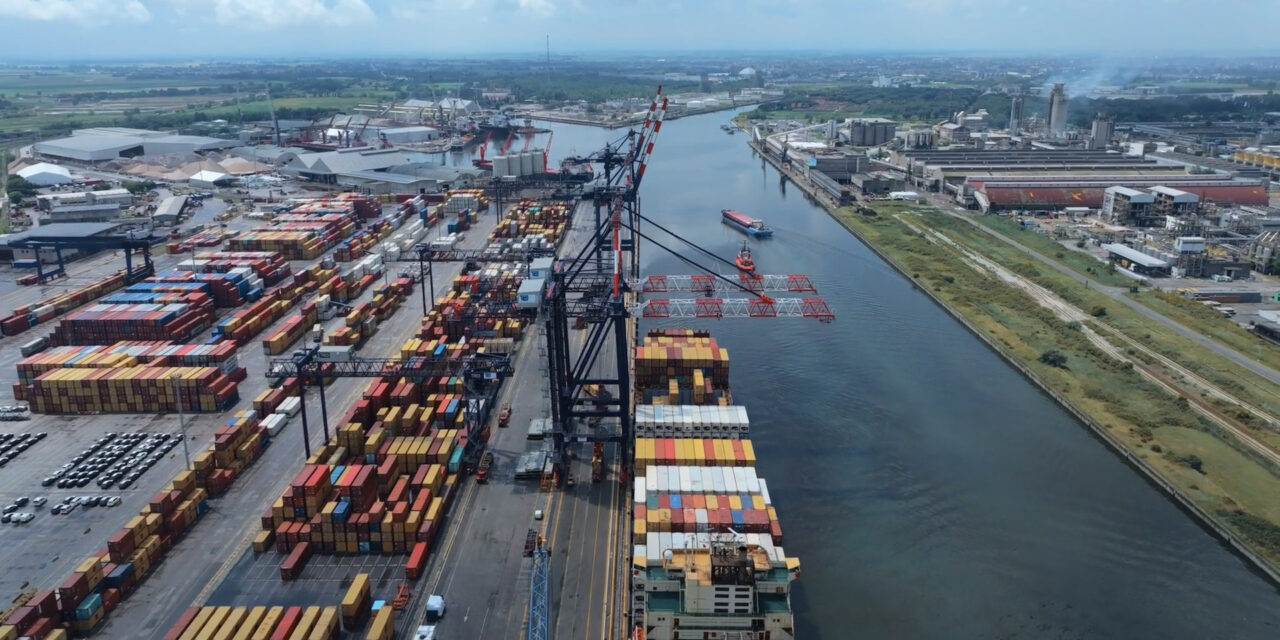
TRIESTE – The Port of Ravenna has adopted its new 2026–2028 Three-Year Operational Plan and is restating its ambition: to consolidate its role nationally and to count more in the balance of power in the Northern Adriatic.
The North-Central Adriatic Sea Port System Authority approved the document through a resolution of the Management Committee. The plan marks a shift from the past, in a more unstable international context and with the need to plug into Europe’s major logistics corridors.
The message is straightforward: infrastructure and intermodality are the priorities. Strengthening quay walls, adapting to new dredged depths, and building new basins for energy projects go hand in hand with last-mile works. These include completion of the railway backbones on the right and left banks of the canal, links to terminals, logistics platforms and the customs free zone. The plan also foresees removing rail–road conflicts and building a second movable bridge over the Candiano Canal.
Rail is the core issue. The plan references the quadrupling of the Bologna–Castel Bolognese line, but above all the need for an adequate freight route from Ravenna via Ferrara toward Suzzara and then on to the Brenner. The goal is to prevent the port from being sidelined in north–south flows once the Brenner Base Tunnel comes into service between 2032 and 2035.
Within this framework, Ravenna is also looking at the Upper Adriatic port system. The plan mentions synergies with regional marinas, river–sea links and international traffic, as well as agreements with inland terminals and airports to strengthen the commercial offer and the cruise segment, where the city is already a home port.
On the road side, the plan reiterates the need for the Nuova Romea Commerciale or a variant of the SS 309/E55 to create a fast connection with Mestre. This, too, is presented as part of the strategy to anchor Ravenna more firmly within the corridors linking the Adriatic to Central Europe.
Innovation is also on the agenda: port digitalisation, virtual gates, 5G coverage, cold ironing from renewable sources, low-impact vessels. National-level projects cited as compatible with Ravenna include an agri-food and cold-chain market and initiatives linked to Carbon Capture and Storage.
President Francesco Benevolo recalled that 2025 closed with a new record, with over 28 million tonnes handled. With the 2026–2028 Plan, the port aims to turn that result into a structural base, strengthening its competitive standing and seeking a more defined role in the Northern Adriatic chessboard.