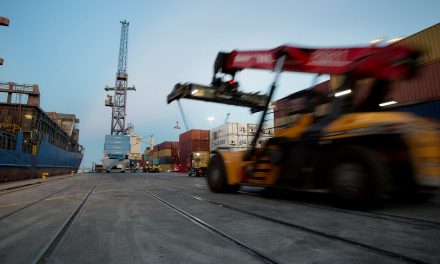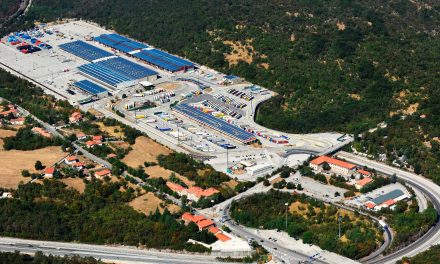


TRIESTE – The Indo-Mediterranean Business Forum kicks off tomorrow in Trieste, bringing together logistics and transport companies, along with the sectors that already benefit—or will be involved in the future—in the growth of trade between the economies of the Indian Ocean and the Mediterranean Sea.
The Forum connects businesses from three key geographical areas: Central and Eastern Europe (including the Balkans), the Eastern Mediterranean (including Turkey, Israel, Egypt and Greece), and India together with the Gulf countries. Italian and European political and industrial leaders will open the meeting with welcome remarks. The two-day event will include structured sessions and networking opportunities to explore new opportunities and identify the main transport barriers requiring urgent attention.
It may also mark the first public appearance in the area by the newly appointed President of the Port System Authority in charge of the ports of Trieste and Monfalcone.
Francesco Parisi, president of the historic shipping house bearing his name and also head of “Trieste Summit”, the association that brings together supporters of the project, explains what has changed in recent months.
President Parisi, we last spoke in March, when people were still talking about the “Cotton Road”; today we are talking about the Indo-Mediterranean Corridor. Beyond the names, what has changed in recent months?
«Attention on the project has increased significantly. The Government has appointed Ambassador Francesco Talò as Special Envoy; he was with us in Trieste on 2 March on the occasion of the arrival of the Amerigo Vespucci. The Deputy Prime Minister and Minister of Foreign Affairs, Tajani, in New Delhi explicitly referred to Trieste as IMEC’s European hub and announced an upcoming summit of the IMEC signatory countries in Trieste. There have been major events, for example in New Delhi, Rome, Budapest and Marseille, focusing on IMEC and on each of these occasions—also thanks to the active presence of the Trieste Summit Association—Trieste was indicated as one of the most interesting potential nodes of the corridor serving Central and Eastern Europe».
Trieste remains a strategic port for the project. Have any new ‘competitors’ for the Friuli Venezia Giulia port concretely emerged?
«Trieste, as the northernmost port in the Mediterranean, already better connected to Central and Eastern Europe than any other port, confirms its candidacy as IMEC’s European gateway. It is absolutely normal to have competitors: this shows that the corridor is seen as a major potential generator of activity not only by us. In any case, it is clear that there will be multiple endpoints (no one will go to Madrid from Trieste just as no one will go to Budapest from Marseille) and, knowing how shipping lines operate, each endpoint will have significant spillover effects across a wide catchment area encompassing a plurality of ports».
A parliamentary intergroup dedicated to the corridor has just been created. How could this affect the Italian government’s choices in the short term and what impact can this step have on Italy’s position in relations with India, the Gulf countries, Israel and Egypt?
«Several members of the parliamentary intergroup will be in Trieste on 4 and 5 December and we have been in contact with them for months. The establishment of the parliamentary intergroup is another of the events demonstrating the increased attention on the project. We understand that the intergroup will engage with parliamentary colleagues from the IMEC signatory countries to launch cooperation between intergroups. We view this development with great interest, as it helps strengthen awareness and planning capacity».
What is missing today, politically speaking, to give the project a concrete direction?
«We believe it is necessary to assess which concrete issues should be tackled as priorities along the corridor, particularly within Europe: investments to increase capacity and overcome infrastructure bottlenecks, customs agreements to facilitate transit (‘fast corridors’), cooperation and the exchange of best practices in managing intermodal chains: sea–rail–road interchange nodes».
What role can cooperation between Italian institutions and major international logistics operators play?
«In France the project is being led by the President of the Republic and the national carrier CMA-CGM. We hope that a similar interest will also be expressed explicitly by Italian shipowners, both in the field of deep-sea connections and in the short sea, where the IMEC corridor could see its market grow exponentially».
The two-day event in Trieste is an important signal for the city and its area. What is expected from the meetings on the agenda?
«An increase in awareness of the potential importance of Indo-Mediterranean traffic for our territory, also in terms of high value-added activities; that guests from abroad understand that we entrepreneurs in the region are convinced and ready to work hard; that Government representatives confirm their commitment to IMEC and to Trieste».