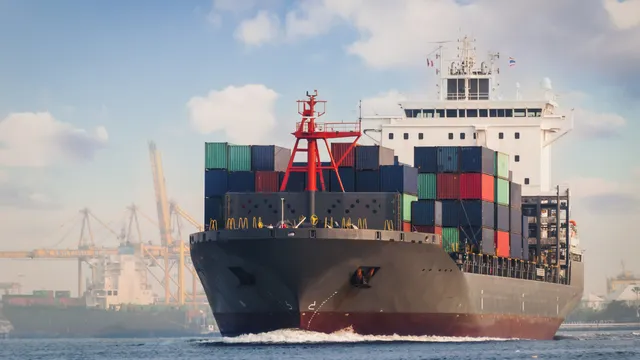


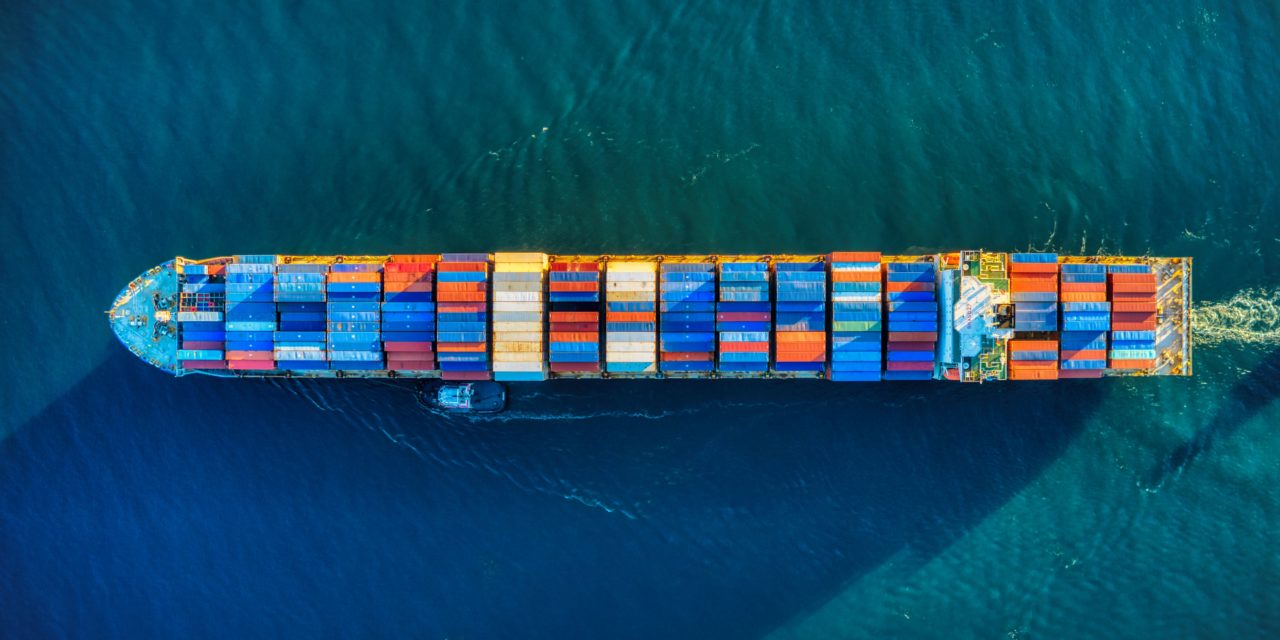
TRIESTE – 2026 could mark a new slowdown for the container market, after two years of strong volatility. Leading international analyses are converging on a scenario of pressure on freight rates, excess capacity and a risk of congestion at major ports, especially if traffic returns steadily to the Suez Canal.
According to BIMCO, capacity growth will continue to run at levels similar to, or higher than, demand. Estimates point to fleet growth of around 3% against a more limited increase in volumes. A possible return of ships to the traditional Asia–Europe routes, after the phase of forced diversions, would reduce the ‘artificial’ demand for tonnage generated by longer voyages, bringing additional capacity back to the market quickly.
BIMCO’s analysis also flags a weak start to the year, with the risk of declining volumes in the first part of 2026 and any recovery only in the second half, linked to the performance of the global economy. In this context, a return to Suez is seen as an efficiency factor for carriers, but also as a potentially destabilising element for European ports, which may have to deal with concentrated traffic peaks.
A similar reading also comes from UNCTAD, which describes a fragile international trade environment, with slowing exchanges and greater exposure to geopolitical shocks. For maritime transport, this means thinner margins and more selective investment, particularly on the infrastructure and digital fronts.
The top managers of the main container lines confirm, albeit with different tones, this cautious mood. Vincent Clerc, CEO of A.P. Moller – Maersk, spoke of a market marked by high uncertainty, with demand and rates subject to rapid swings that are difficult to predict. The focus, according to the Danish group, remains on supply chain stability and on the ability to absorb less favourable market phases.
Along the same lines is Rolf Habben Jansen, CEO of Hapag-Lloyd, who described the context as ‘highly volatile’, with freight rates under pressure and costs still high. In this scenario, supply discipline and capacity control become central to avoid a sharper deterioration in economic results.
Overall, the outlook for 2026 points to a container market closer to a normalisation cycle than to a new expansionary phase. More than a structural crisis, operators see an adjustment, with concrete effects on freight rates, vessel utilisation and port operations. For ports and terminals, the challenge will be to manage less predictable flows, while for carriers the game will be played on efficiency, alliances and operational flexibility.