


TRIESTE – The transit through the Suez Canal of the CMA CGM Jacques Saadé marks the French group’s return to full-load sailings. A Maersk vessel also transited, for the first time since the agreement with the Canal Authority.
The Suez Canal is once again seeing the passage of major container ships after two years of absence, with tangible signs of a normalization of traffic on the Asia–Europe routes.
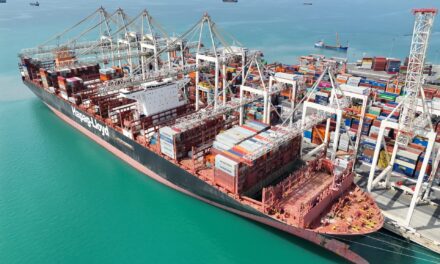
On 23 December 2025, the Canal recorded the transit of the CMA CGM Jacques Saadé, one of the largest container ships in the world, included in the southbound convoy sailing from the Mediterranean area toward Asia. The LNG-powered vessel marks the return to full-capacity operations for CMA CGM units on the Suez route.
The Jacques Saadé is 400 meters long, 62 meters wide, has a net tonnage of 231,000 tons and a capacity of around 23,000 TEU. It is the largest container ship to have transited the Canal in the past two years. On the same day, the CMA CGM Adonis also crossed Suez in the northbound convoy, with a load of 154,000 tons.
Alongside the return of CMA CGM ships, the Canal also recorded a significant transit for Maersk. The container ship Maersk Sebarok crossed Suez in the northbound convoy, after transiting the Bab el-Mandeb Strait, coming from the port of Salalah in Oman and bound for the United States. It is the first Maersk vessel to use the Canal since the signing of the strategic partnership agreement with the Suez Canal Authority.
The Maersk Sebarok is 318 meters long, 40 meters wide, with a draft of 14 meters and a gross tonnage of 82,000 tons. A passage that signals the start of a gradual return by the Danish group to Red Sea routes.
According to Suez Canal Authority chairman Admiral Ossama Rabiee, the return of major shipping lines is the result of promotional efforts and dialogue carried out in recent months. The resumption of transits, he stressed, could have positive effects on the entire maritime transport market.
The Authority is now inviting other shipping companies to review their services and resume transits through the Red Sea and Bab el-Mandeb, returning to use the Suez Canal. Forecasts point to a progressive improvement in volumes over the course of 2026, with traffic returning to levels closer to normal in the second half of the year.