

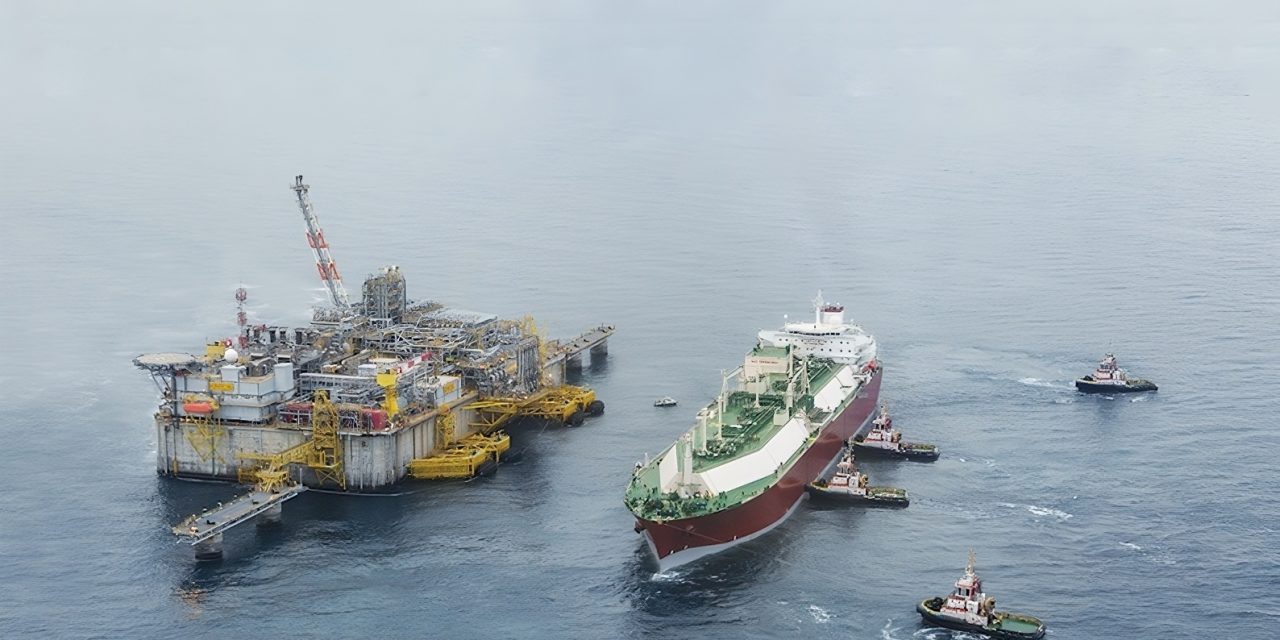
VENICE – Military tensions in the Strait of Hormuz are fuelling concerns over global flows of oil and liquefied natural gas (LNG). Uncertainty is rising for the Adriatic LNG terminal, offshore from Rovigo on the Veneto coast. The facility is one of the main entry points for liquefied gas into Italy’s energy system. The conflict involving the United States, Israel and Iran has turned the Strait of Hormuz— the strategic sea lane between the Persian Gulf and the Gulf of Oman—into a critical chokepoint for global energy markets. According to market data, around one fifth of the world’s oil and LNG exports pass through the strait every day, making it the key artery for energy shipments from Gulf countries to Asia and Europe. In the days following the start of military operations, some shipping companies and market operators suspended tanker and LNG carrier transits through the strait, alongside fears that the waterway could be closed for security reasons.
This had an immediate impact on energy commodity prices, with increases and renewed tension also affecting diesel. For infrastructure such as the Adriatic LNG Terminal off Rovigo—embedded within the network of Italian and European energy hubs—the scenario implies a phase of heightened uncertainty in supply flows and in the procurement costs of imported LNG. Reduced global LNG availability and growing competition among importers may affect scheduled deliveries, maritime logistics planning and short-term price formation.
From an economic standpoint, low stock levels and reliance on seaborne traffic are generating a highly sensitive market environment, with knock-on effects on international commodity quotations. A reduction in seaborne imported supplies risks triggering stronger competition for available cargoes and upward pressure on prices which, according to some hypotheses voiced by global experts, could even lead to a doubling of prices. In short, those unwilling to wait may be prepared to pay more to transit the strait, setting off a cascade of cost increases that will inevitably reach end consumers and businesses.
Turning back to Rovigo, a week ago Adriatic LNG issued its latest update, confirming that in 2025 the terminal injected 8.2 billion cubic metres of natural gas into the national grid, equal to more than 13% of the country’s total consumption. More than 40% of the LNG volumes arriving in Italy passed through the Veneto terminal, confirming the infrastructure’s strategic role as Italy’s main gateway for LNG imports.
t.b.