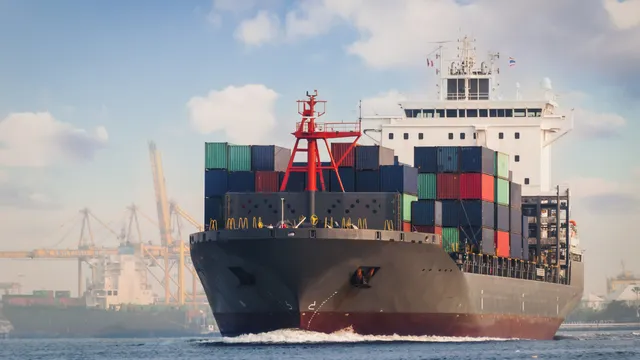


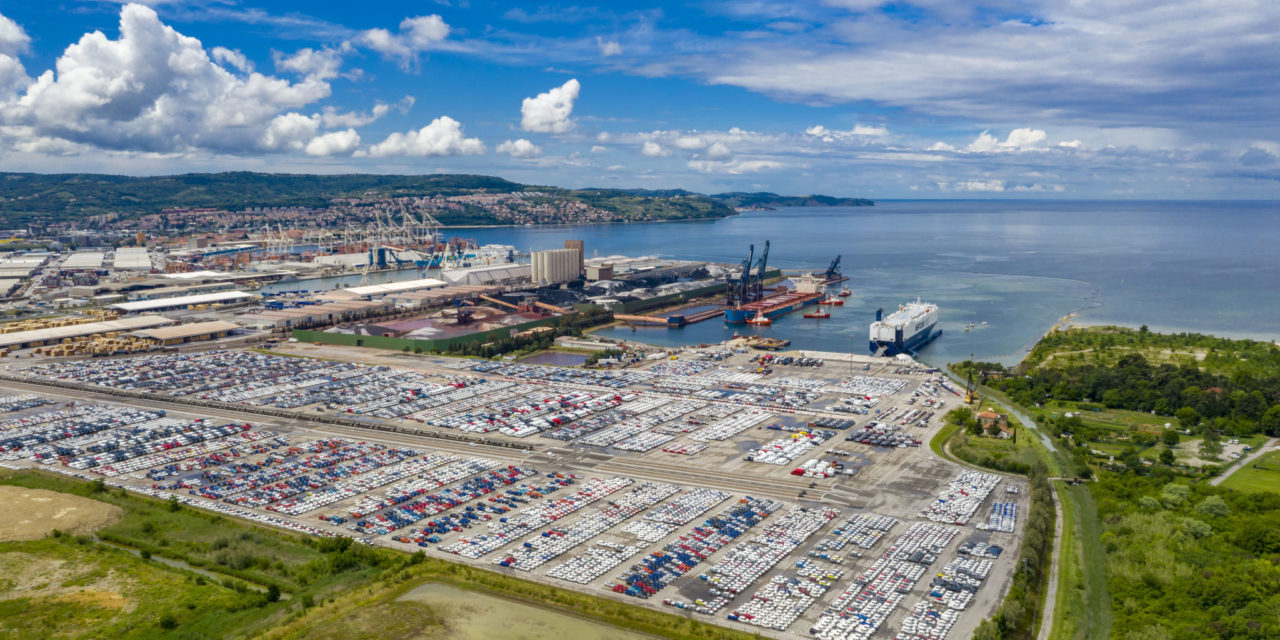
TRIESTE – The crisis in the Strait of Hormuz does not directly involve the Port of Koper, but slowing maritime traffic and geopolitical tensions in the Middle East are already producing indirect effects on logistics and transport costs.
According to economists quoted by several Slovenian media outlets and by the STA news agency, a prolonged disruption in the strait could have global consequences. The Strait of Hormuz is one of the world’s main energy chokepoints, and any halt to transits risks pushing up the cost of goods and services worldwide, hitting in particular economies that depend on oil imports, such as China, India and Japan.
The Institute of Macroeconomic Analysis and Development of the Republic of Slovenia (UMAR) warned that a prolonged escalation of geopolitical conflicts in the Middle East could lead to higher commodity prices, stronger inflationary pressures and disruptions to global supply chains. As far as Koper is concerned, the link to the Strait of Hormuz is only indirect. The Slovenian port handles a significant share of container traffic to and from the Far East, in particular South Korea, China and Southeast Asia. The shipping lines connecting these areas to the port do not transit the Persian Gulf and therefore do not pass through the strait.
Even so, the situation is already influencing the sector. According to Luka Koper (the port operating company), based on information received from shipping lines, diversions from established sea routes and changes in shipments to countries considered high-risk from a security standpoint can be expected. These dynamics may also have operational effects for ports. In particular, the volume of goods temporarily remaining in terminals could increase, pending secured onward shipment or the availability of new routes.
Rail operators are also taking precautionary measures. Rail Cargo Group has advised its customers not to send, until further notice, export cargo via the Port of Koper to countries with elevated security risks without prior confirmation of acceptance by a shipping line or without already-secured sea transport. The measure is also intended to ease the port’s currently limited capacity and prevent a build-up of cargo that may not be shipped promptly by sea.
Tensions are also affecting maritime transport costs. Robert Sever, Director of the Transport Association at the Chamber of Commerce and Industry of Slovenia, said that carriers are applying risk-related surcharges linked to war risk. In some cases shipments are postponed, or vessels do not depart or arrive as scheduled, with a consequent reduction in traffic volumes.