

VENICE – «Alongside economic and social value, we are also working on environmental impact: the relationship with the environment and with people is the most difficult challenge the port has to face. In the three-year operational plan just approved, there are measures and investments to reduce impact, restore the ecosystem, but also improve energy efficiency and sustainability, alongside competitiveness».
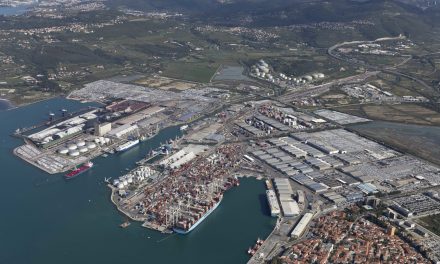
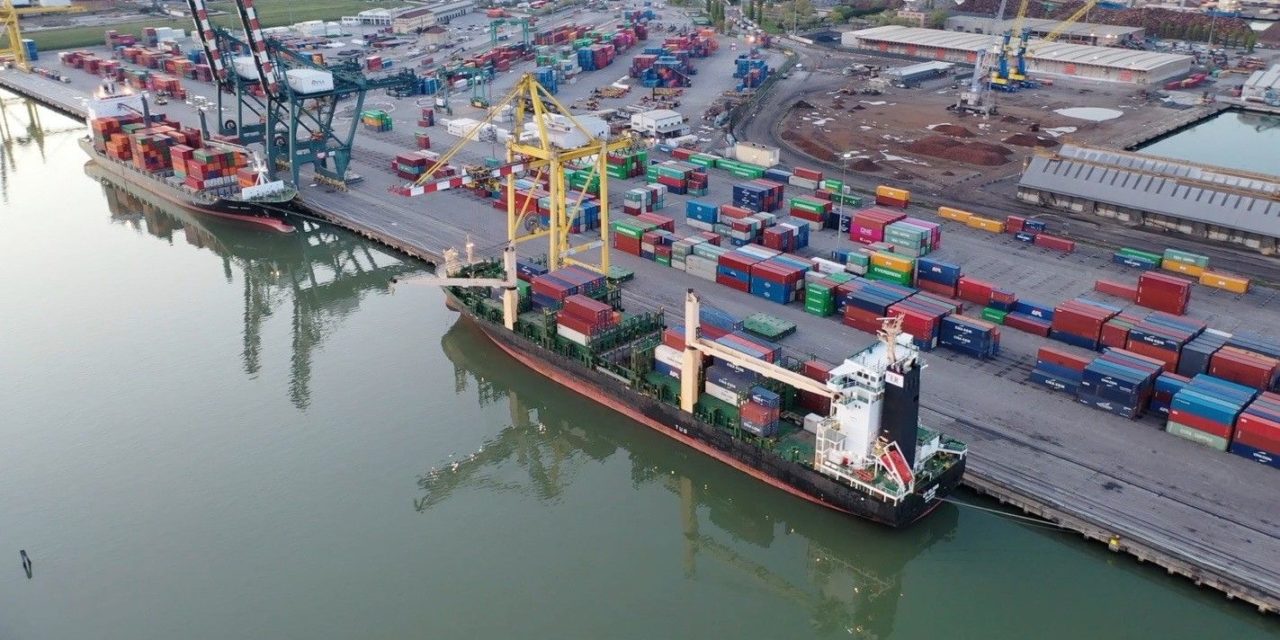
With these words, the president of the Northern Adriatic Sea Port Authority, Matteo Gasparato, outlined the “green” plan for the ports of Venice and Chioggia, where the Authority’s new headquarters will open in a few months.
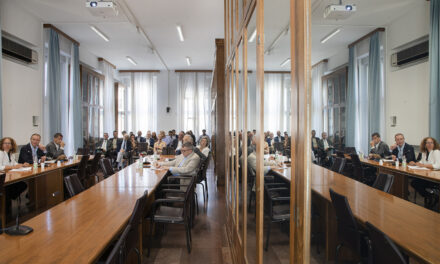
From Ca’ Corner, the seat of the Metropolitan City of Venice, the president went on, during the presentation on 25 March, highlighting the morphological redevelopment project in the Malamocco area, with the creation of 66 hectares of salt marshes and 33.4 hectares of mudflats. The aim is to reduce erosion processes, limit sediment loss and promote the natural deposition of suspended materials: «A configuration that maximises the environmental dimension, so that the port can play a leading role in the ecological transition».
Another area on which the Port Authority is focusing its efforts concerns the management of rainwater through the identification of best practices, in order to adopt a different approach: «No longer waste to be disposed of, but a resource to be recovered and reused, perhaps for wetting cargo, thus reducing water consumption and the use of new water resources».
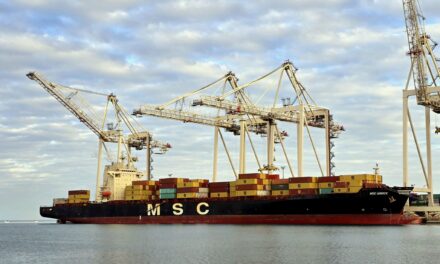
Also with a view to optimising resources, but also as a matter of “prudence” given the current unstable geopolitical situation, shore-side electrification is planned by 2026-27, with a reduction of up to 70% in CO2 emissions and 90% in emissions of nitrogen oxides and particulate matter: «We will allow ships to connect to the shore power grid, thus switching off their auxiliary engines. We will therefore eliminate both environmental and noise impacts. We will intervene at Fusina, Canale Nord, Riva dei Sette Martiri, Santa Marta-San Basilio, and also Chioggia, with supply points, for a total of six million euros. In addition, we will expand the grid with energy sources such as photovoltaic panels. The port will not only be an economic infrastructure, but a system capable of generating value».
t.b.