

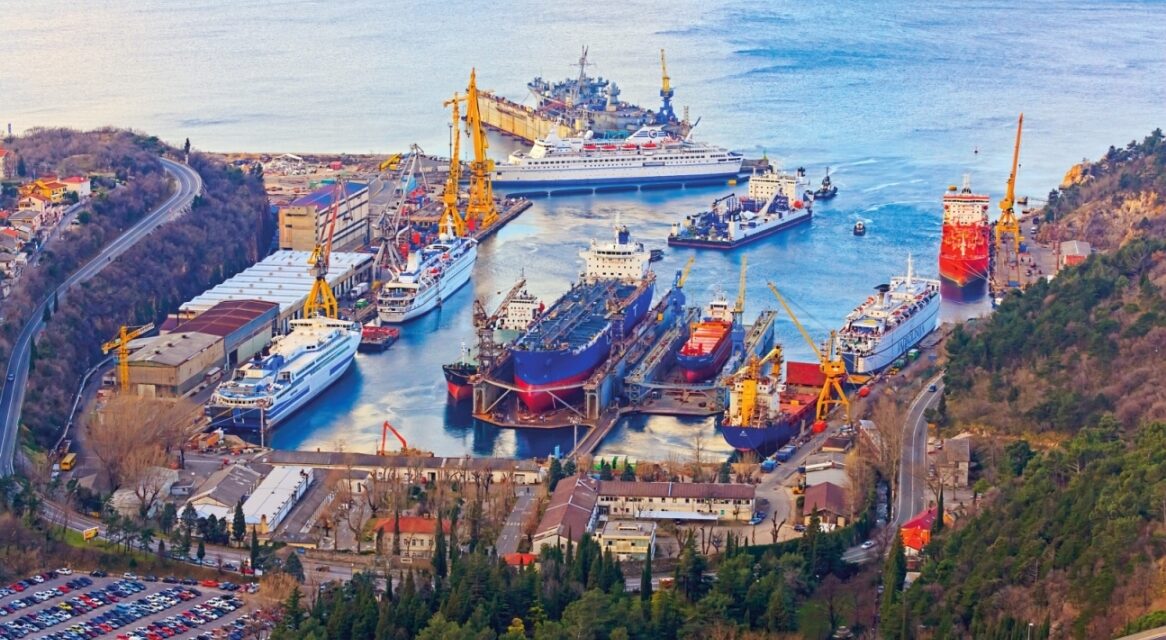
RIJEKA – The Rijeka-based Viktor Lenac shipyard is trying to move past several difficult weeks by entrusting the company’s leadership to a figure who has grown within the business. Luka Hrboka is the new president of the Management Board, appointed by the Supervisory Board on the eve of the Easter holidays. The appointment does not come at an ordinary moment, but at the end of a sequence of events that have shaken the main ship repair yard in the Adriatic area.
The first sign came at the end of March, when the company announced that it had identified a series of unauthorized financial transactions. The company filed a complaint against unknown persons and launched internal checks, in cooperation with banks and specialist parties, to reconstruct the money flows and limit the damage. The details remain confidential, but according to rumours it could be a cyber fraud worth several million euros.
A few days earlier, another piece of news had taken the sector by surprise: the sudden resignation of Management Board president Sandra Uzelac. Officially motivated by personal reasons, it nevertheless marked the early end of a long professional career within the shipyard, which had begun more than thirty years ago and culminated in the past five years at the head of the company. During that transition phase, operational management had been entrusted precisely to Hrboka, already a member of the Management Board. Now the handover has become definitive.
The new president represents a choice of continuity: he joined Viktor Lenac in 2009 and built his professional career within the company. A graduate in international trade from the University of Rijeka and in naval architecture and energy engineering from the Faculty of Maritime Studies, he is closely familiar with the shipyard’s production and organizational dynamics. His mandate will run until 1 March next year. For the time being, the top management structure remains lean: alongside Hrboka, Francesco Ciaramella continues to operate, having joined last summer as representative of the Palumbo group, the shipyard’s majority shareholder.
Despite the recent turbulence, the company’s economic fundamentals remain solid. 2025 closed with revenues of 99 million euros, up on the previous year, and with net profit of 4.7 million euros. The results were driven above all by high-profile orders, including a U.S. military vessel and a luxury cruise ship, which involved complex, high value-added work.
The employment picture also appears stable: there were 283 direct employees at year-end, joined by around 90 at the subsidiary VL Steel. The average net monthly salary stands at around 1,700 euros. The real test for the new leadership, however, will be managing the present rather than the past numbers. On the one hand, there is the need to shed full light on the suspicious transactions and strengthen internal security systems; on the other, the challenge of maintaining competitiveness in a sector increasingly exposed to global pressure and technological innovation.
The decision to rely on an internal figure signals the intention to avoid further shocks and ensure operational continuity. It remains to be seen, however, whether this will be enough to close a phase that, between unexpected resignations and ongoing investigations, has tested the resilience of the entire corporate system.
For Viktor Lenac, a new phase is therefore beginning, in which stability and credibility will be the key words. And much will depend on the new president’s ability to turn a critical period into an opportunity for relaunch.