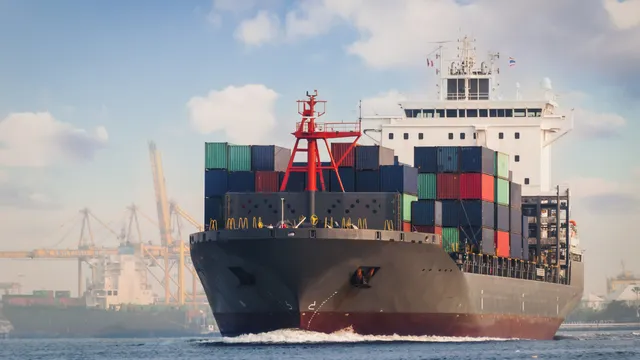


MONFALCONE – The Monfalcone Harbour Master’s Office has launched a review of the towage service, now considered a decisive issue to support the port’s growth and the arrival of even larger vessels.
The announcement came from the Harbour Master, Fausto Schirone, speaking at the forum organised by Adriaports together with Confetra FVG, under the patronage of the Monfalcone section of the Propeller Club.
The review of the service stems from a structural transformation in maritime traffic, influenced by international geopolitical tensions – from the war in Ukraine to the Suez Canal crisis and the critical issues in the Strait of Hormuz – which are changing routes and the size of vessels arriving in the Adriatic. Monfalcone is now handling units of between 40,000 and 80,000 tonnes, with operational requirements very different from those of the past.
During the technical meeting, hosted in the Cicciarella room of the Port Authority, terminal operators and industry players took stock of the main infrastructural, regulatory and organisational issues still open in order to support the port’s competitiveness. Taking part in the discussion with the port cluster were the new secretary general of the Authority, Natale Ditel, in his first official public appearance, the CEO of FHP Terminal Monfalcone, Gian Carlo Russo, the CEO of Midsea, Andrea Valentinuzzi, and the CEO of Adriafer, Maurizio Cociancich.
The most urgent issue concerns the adaptation of port services to the new scale of traffic. «The Harbour Master’s Office, in dialogue with operators and terminal companies, has activated the procedure for reviewing the towage service and a study has been requested to assess the impact of higher tariffs on operators», Schirone explained. Guaranteeing a 24-hour service would in fact involve an estimated tariff increase of around 41%, as well as the need to redefine organisational and safety standards, since the current operating hours are no longer adequate for the needs of large vessels. A shared commercial proposal is therefore on the table to extend the service’s operating hours. It remains to be seen, however, whether all operators will be willing to bear such high costs or whether the service will be requested “on demand” only for larger vessels, especially during night-time operations.
The discussion also highlighted a broader port development strategy. Ditel identified three priority directions: strengthening the rail model, dredging the seabed to -12 metres alongside the quay and boosting digitalisation based on the model of the port of Trieste. These objectives are considered essential to accompany the port’s growth, which in recent years has recorded double-digit increases, although with some declines in 2026 linked to the slowdown in traffic and new international trade constraints.
Gian Carlo Russo described the transformation in traffic, noting that Monfalcone has moved from handling 8,000-tonne vessels to 40,000-tonne units, reaching around 4 million tonnes of goods handled and positioning itself as the fourth national port among ports of national interest. This growth, however, is being held back by increasingly evident infrastructural limits.
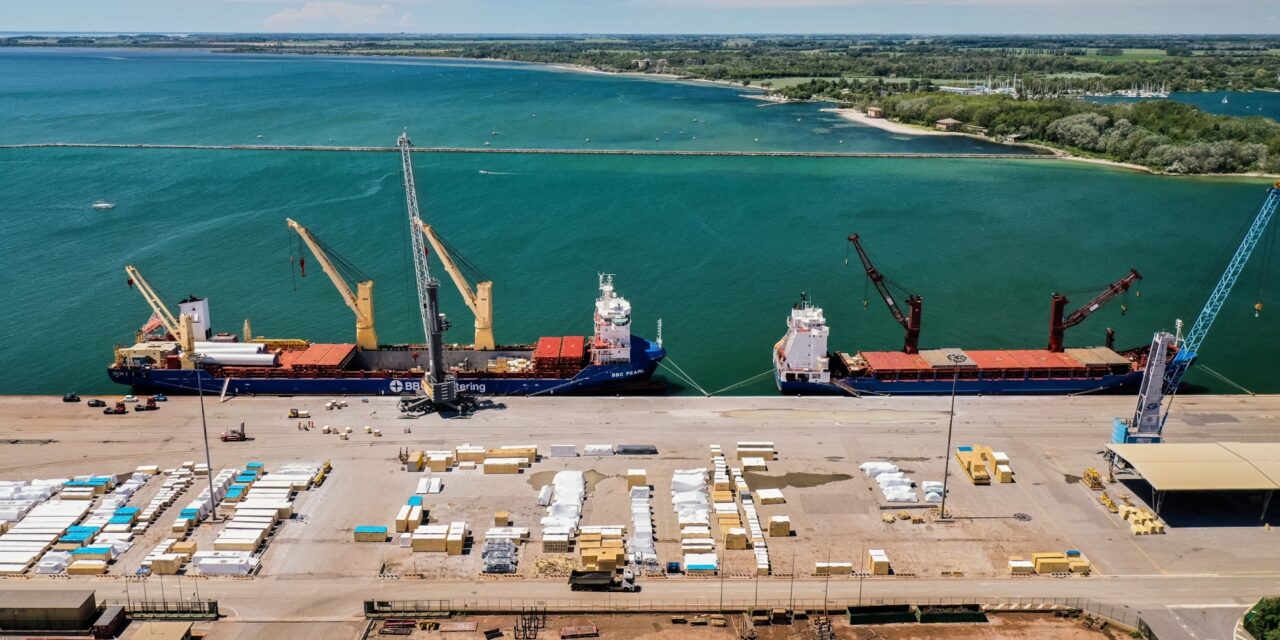
The emblematic case concerns the Austrian steel group Voestalpine, which uses post-Panamax ships of 70,000-90,000 tonnes and up to 300 metres in length. Before reaching Monfalcone, the vessels are forced to lighten part of their cargo in the port of Koper because of insufficient depths at the port, currently limited to 10.90 metres. «Those tonnes could arrive entirely here», Russo observed, once again stressing the need for full dredging, new operating areas and quay extensions to avoid, as he put it, «playing Tetris with ships».
On the same line was Andrea Valentinuzzi, CEO of Midsea, who recalled the need for an overall strategic vision capable of making services that are still extraordinary today structural. «If a service is needed until midnight, we must be able to have it in order to make the port attractive», he said, referring not only to tugboats but also to the services of the Guardia di Finanza in the port.
Finally, the rail issue. Maurizio Cociancich, CEO of Adriafer, explained that the rail logistics system has already been strengthened: operating hours have moved from the traditional 8 am-5 pm slots to a service that now normally covers the 6 am-9.30 pm period, with an increase in available train paths and the use of more powerful locomotives to move heavy wagons loaded with slabs.