

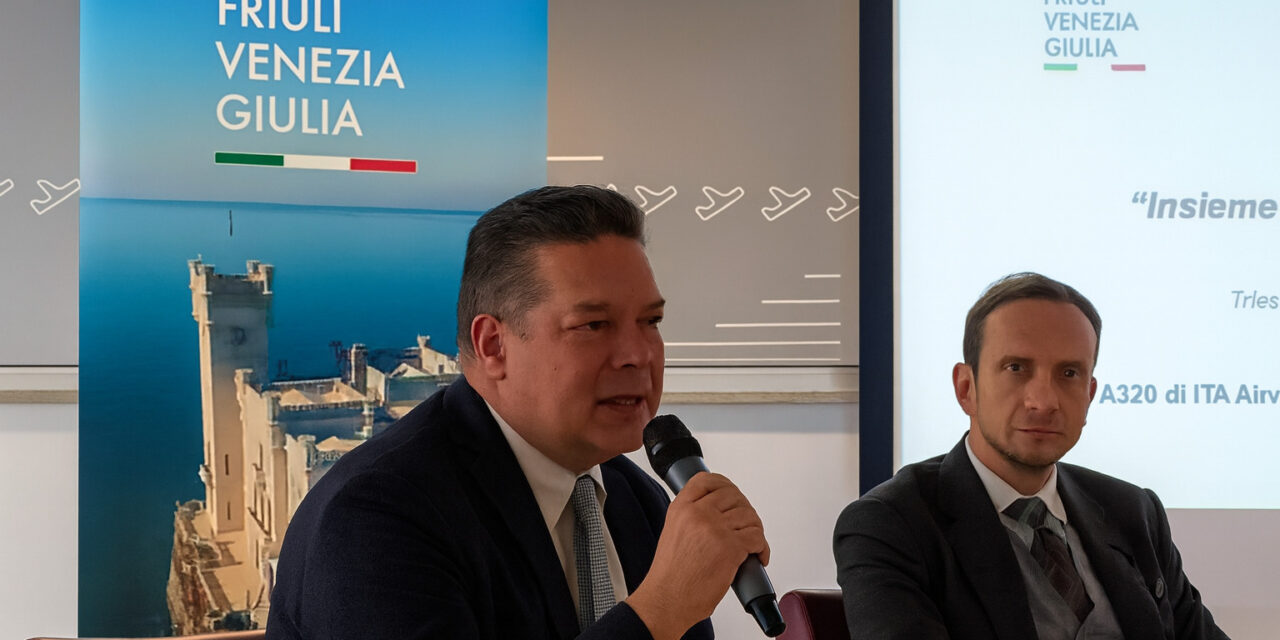
TRIESTE – The release of funds for the new Servola railway station and for the road link connected to Trieste’s major road network has revived one of the most eagerly awaited infrastructure projects for the port of Trieste. Confirmation came today during a conference dedicated to ports, logistics and energy.
The importance of the result was highlighted above all by Marco Consalvo, president of the Port Network Authority of the Eastern Adriatic Sea, who described it as a fundamental step in ensuring continuity for the investments planned in the Friuli Venezia Giulia port. «I am extremely pleased; excellent work has been done», Consalvo said, thanking Regional President Massimiliano Fedriga, Minister Matteo Salvini and Minister Giancarlo Giorgetti for enabling the funds to be released. According to the Authority president, the measure «gives certainty and perspective to other major investments, therefore not only Servola, but also Pier VIII».
Consalvo also underlined the link between the project and other strategic schemes for Trieste, citing the high-speed rail connection as an essential element for the port’s growth. He also explained that the resources were already available, but that an extension was needed to the original 2026 deadline, which was considered unrealistic.
Operationally, the Authority president announced that the technical project, originally drawn up in 2022, has already been updated with the new price adjustment and that the aim is to launch the tender procedure quickly as soon as the final decree arrives. «We will immediately start the tender», Consalvo said.
The response from regional infrastructure councillor Cristina Amirante was also positive. She described the recovery of the 199 million euros as a strategic result achieved through joint work between the Region and the Government. Amirante linked the project to the need to strengthen the international role of the port of Trieste and rail connections towards Eastern Europe, reiterating the importance of the so-called ‘rail cure’ for Friuli Venezia Giulia’s competitiveness. At the same time, she drew attention to the critical issues linked to works on the Pontebbana line and the closure of Tarvisio, considered a risk for the regional economic system.
Great satisfaction was also expressed by Enrico Samer, president of Samer & Co. Shipping, who described the news as ‘wonderful’ for port and maritime operators. Samer stressed that the port of Trieste still has significant untapped potential, especially in Ro-Ro traffic and bulk cargo, arguing that the new rail infrastructure will be used immediately once completed. The manager also relaunched the issue of expanding port areas, supporting the need for further developments in the Porto Nuovo area and in the New Free Port areas.
On the port operators’ side, Antonio Barbara, CEO of HHLA PLT Italy, described the new Servola railway station as «an essential step for the logistics and industrial development of the port of Trieste». Barbara recalled that the project is closely linked to the expansion of Pier VIII and of the former Servola ironworks areas, stressing that both the rail component and the road link to Trieste’s major road network are considered indispensable to support traffic growth, intermodality, employment and the long-term competitiveness of Trieste’s logistics system.