

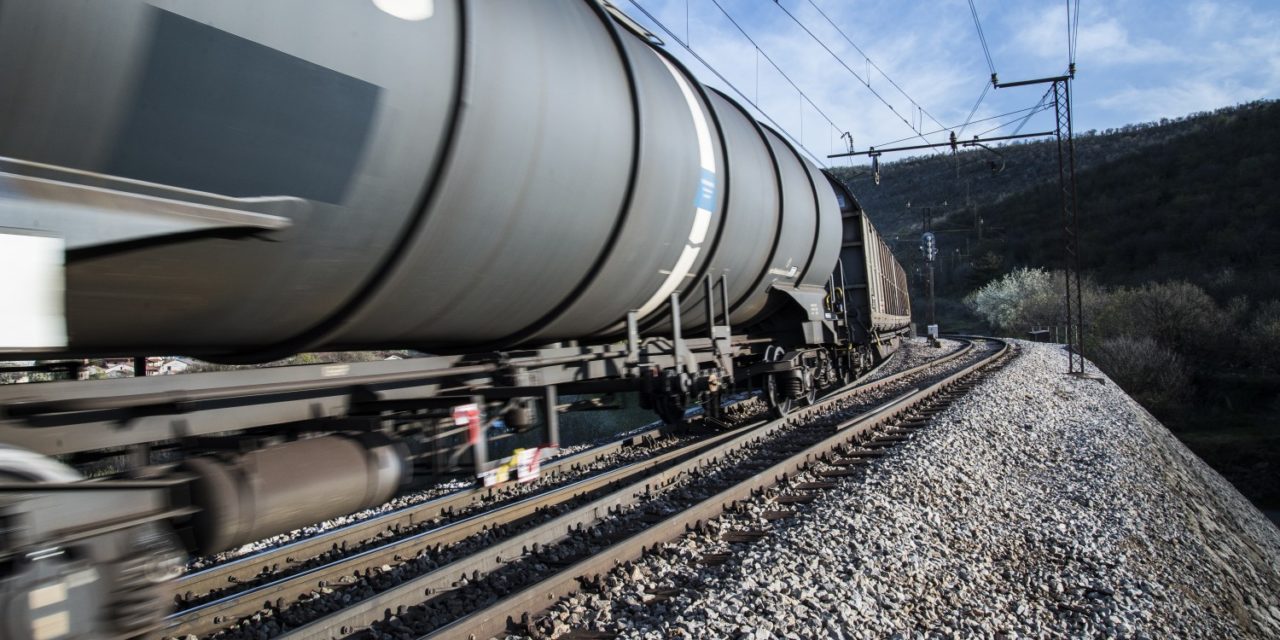
TRIESTE – The new railway line between the port of Koper and Divača has begun the procedure for entering service.
The company 2TDK has submitted to the Slovenian Ministry of Natural Resources and Spatial Planning the application to obtain the infrastructure use permit, an essential requirement for launching the subsequent procedures that will lead to the regular operation of the line.
The section, which became passable as early as last March, is one of the most important infrastructure investments carried out in Slovenia in recent years and represents a strategic element for the development of the port of Koper. The procedure for issuing the permit involves checking all the requirements needed for the safety of the infrastructure, including the civil works completed, geotechnical works, railway safety systems and compliance with environmental and technical requirements. Once the green light has been obtained, authorisation to start railway operations will also be required, the final step for the full integration of the new line into the national network.
Construction of the new railway began in 2021 and faced numerous technical difficulties. During excavation works, several karst cavities were identified, some of which required specific intervention to overcome them, while one of the main critical issues was the movement of the rock mass in the Glinščica valley, which required extraordinary consolidation measures.
At the same time, 2TDK is already looking ahead to the construction of the parallel track. The company has published a tender for preventive archaeological investigations along some sections of the future route, particularly in the Ospo area, where sites of archaeological interest have already been identified. The activities will include analysis of the existing documentation, exploratory excavations and the preparation of a final technical report. The works must be completed within twelve months of the start of the assignment, while the deadline for submitting bids is set for 10 June.
Investigations carried out in previous years along the route of the right-hand track had already brought to light finds of considerable historical interest. The discoveries include the remains of a Roman villa rustica dating back to the 1st century AD.