

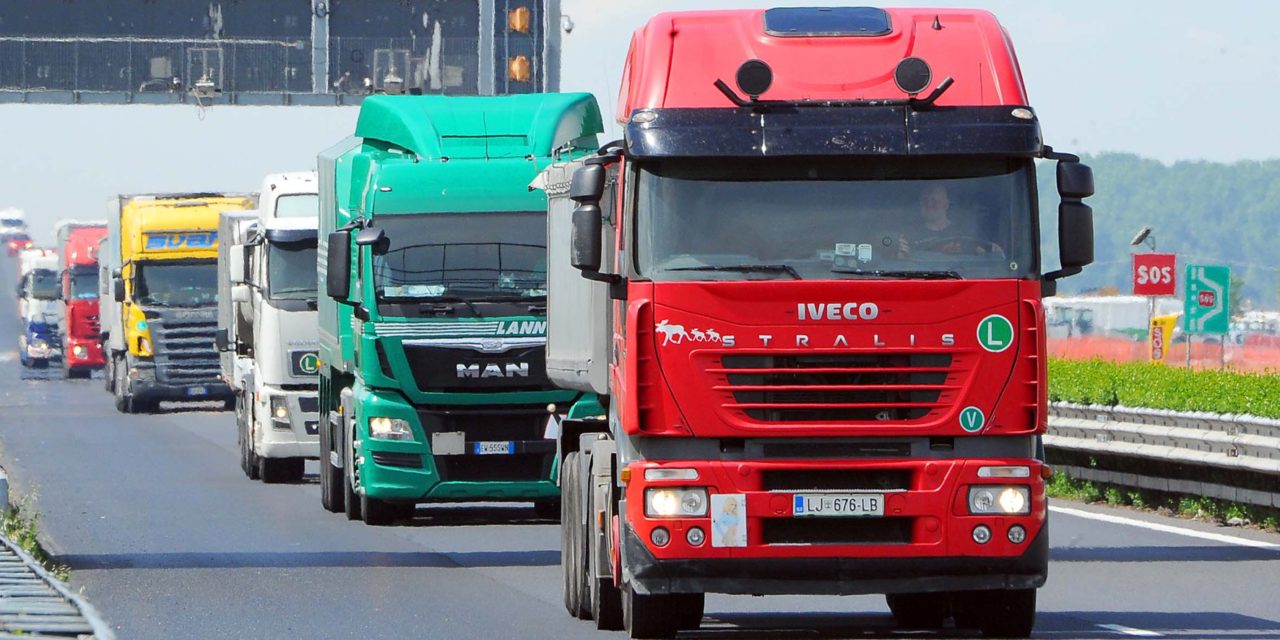
TRIESTE – Rising diesel prices are putting road freight transport under pressure, with prices above €2 per litre and ever tighter margins for companies.
In the first quarter of 2026, the price of road diesel in Italy recorded a sharp increase, rising steadily above €2.00/l on the ordinary network and approaching €2.60/l on motorways. Two main factors lie behind this: the increase in excise duties that came into force on 1 January and geopolitical tensions linked to the Middle East. The combined effect has directly hit the operating costs of road haulage companies, already exposed to limited margins.
The timeline of recent weeks shows a rapid escalation. With the entry into force of the 2026 Budget Law, excise duty on diesel was aligned with that on petrol, with an increase of about 5 euro cents per litre including VAT. In the first days of March, trade associations began sounding the alarm, pointing to cost increases that are becoming ever harder to absorb. On 12 March, a meeting was held at the Ministry of Infrastructure with the main industry associations, but without any immediate decisions.
Road haulage organisations are openly speaking of an emergency. According to estimates, the sector has borne around €80 million in additional costs in a single week. On an annual basis, the impact could exceed €6 billion. For a single heavy vehicle travelling 100,000 km a year, the fuel increase translates into around €2,400 in additional costs, which can rise to €9,000 or more in worse-case scenarios.
The requests put forward to the Government are broadly aligned. The associations are calling for a temporary cut in excise duties, the introduction of tax credits to offset higher costs, the suspension of taxes and social contributions, and the immediate use of excise refunds without waiting times. They are also urging an update of reference costs in contracts and the mandatory application of fuel adjustment clauses.
Some associations are also raising technical issues. This is the case with the possible introduction of “floating excise duties”, which according to some organisations could penalise the most modern fleets that already benefit from refunds. Other critical points concern the European minimum excise threshold, which could reduce the effectiveness of any cuts for heavy vehicles without a specific derogation.
The Government has acknowledged the problem but has not yet adopted any concrete measures. Technical meetings and an interministerial steering group have been launched, while the Guardia di Finanza has started checks into possible price anomalies. Among the options under consideration is the use of additional VAT revenue to finance excise reductions, but at present no operational measures have been introduced.
The economic impact extends to the entire logistics chain. Fuel accounts for around one third of the total costs of a road haulage company. A 20–25% increase in diesel prices can translate into a 7–8% increase in transport costs. However, passing these increases on to customers is neither immediate nor complete, with a resulting reduction in liquidity for companies.
In several cases, companies are considering cutting services or suspending journeys. The risk highlighted by the associations is that of a partial shutdown of the sector, with direct effects on goods distribution. The main critical issue remains the difficulty of absorbing higher costs in a rigid contractual framework and with margins already compressed.