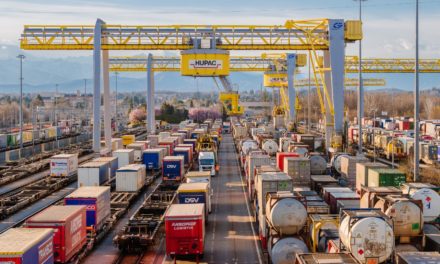


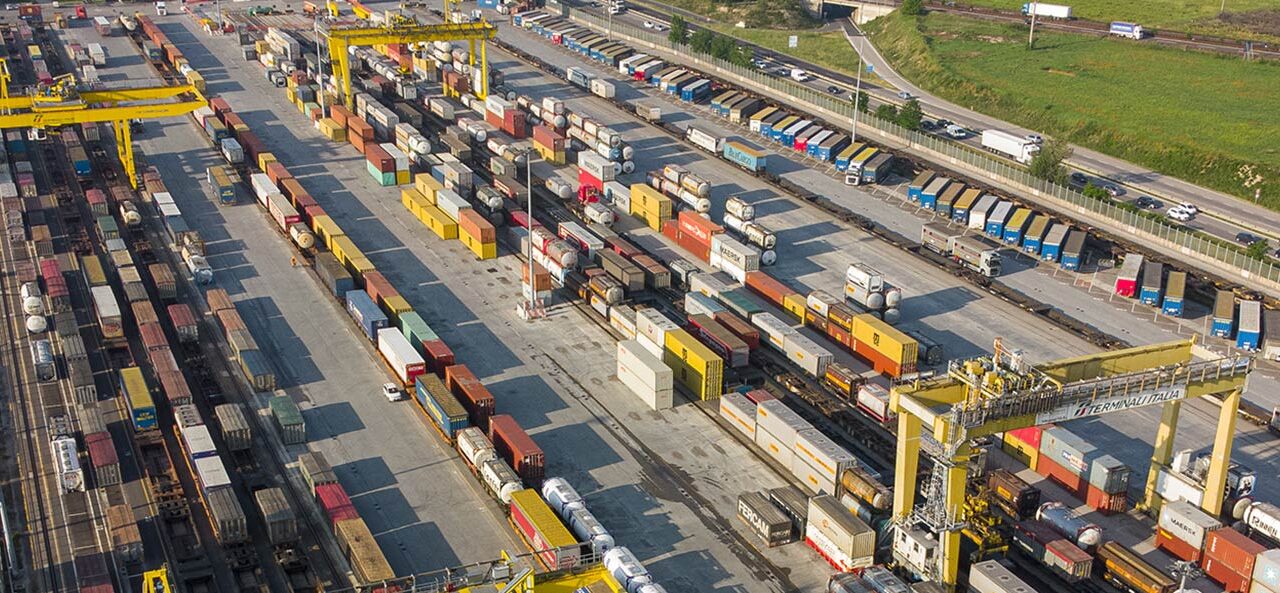
TRIESTE – Verona’s Interporto Quadrante Europa confirms its weight in Europe’s logistics and rail network with its 2024 freight figures: the year-end total reaches 14,574 trains handled.
Growth in intermodal traffic and the resilience of traditional services point to a system capable of sustaining significant volumes while ensuring operational continuity along the main continental corridors. In detail, intermodal remains the terminal’s engine: 12,908 trains moved during the year, equal to 392,016 ITUs and a total of 701,708 TEU equivalent. Freight carried reached 7,551,180 tonnes, confirming the Verona hub’s role as a key platform for flows between Italy, Central Europe and the Mediterranean area.
Non-intermodal rail traffic also recorded measurable volumes: 24,132 tonnes of conventional freight, 7,696 tonnes of new vehicles and 1,666 dedicated trains. A smaller component compared to the main segment, but one that completes the terminal’s offering and reinforces its versatility.
With the 2025/2026 timetable change, moreover, Kombiverkehr will increase frequencies on direct services between Lübeck Skandinavienkai and Verona, rising from two to five weekly round trips per direction. The service will be transferred to the Interterminal at Verona’s freight centre.
On this route it will be possible to carry 30-foot containers and units with dangerous goods or waste originating from the Port of Lübeck, routed via Hamburg or Ludwigshafen. From Quadrante Europa, connections to Bari and Naples are planned, while flows from Sweden, Finland and the Baltic countries will be able to rely on ferry services followed by rail routing, as well as continental links to and from Alnabru via southern Sweden, with extensions towards Hallsberg, Stockholm and Gävele.