

TRIESTE – Instability in the Strait of Hormuz is pushing logistics operators and shipping companies to reorganise flows between Asia and the Middle East, with new multimodal solutions using Red Sea ports and overland links to Gulf markets.
Growing tension in the Strait of Hormuz area, one of the world’s main energy and trade choke points, is in fact reducing maritime traffic in the region and forcing the shipping industry to identify alternative routes to keep supply chains operating. Attacks on merchant vessels and the risk of a navigation blockade are accelerating the search for logistics solutions capable of bypassing the passage through the Persian Gulf.
In this context, new multimodal routes are emerging that combine maritime and land transport and assign a growing role to Saudi ports on the Red Sea.
According to several sources in the international logistics sector, Saudi Arabia is seeking to establish itself as an alternative regional logistics corridor. The Riyadh government has launched a “Logistics Corridors Initiative” aimed at shifting part of the freight flows from Gulf ports to those on the western coast of the Arabian Peninsula, particularly the port of Jeddah.
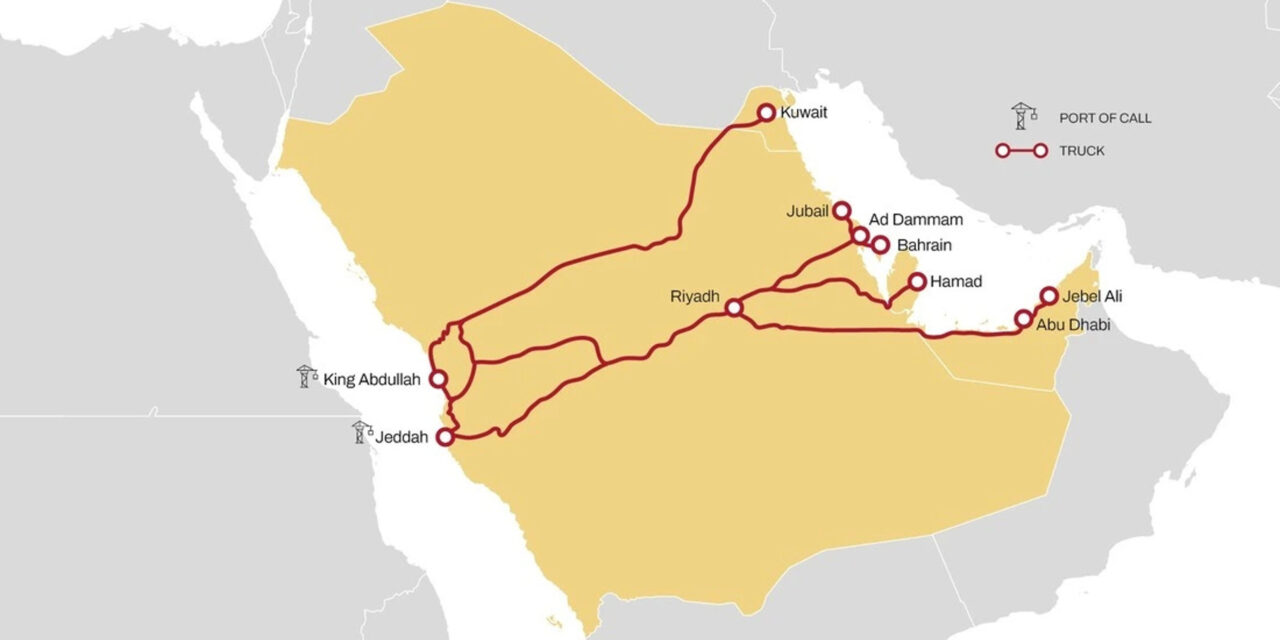
The model is relatively simple. Goods arrive by sea at Saudi ports on the Red Sea and from there continue by truck or through inland logistics links to the main Gulf markets, including the United Arab Emirates, Kuwait, Qatar and Bahrain.
According to sector analyses, Red Sea ports are becoming a sort of safety line for regional importers, making it possible to keep supply chains active despite the navigation difficulties in the strait.
The crisis is also accelerating the shift of part of the energy flows towards Saudi Arabia’s western coast. Traffic data in fact indicate that Saudi oil exports from the port of Yanbu, on the Red Sea, are increasing דווקא to offset the risks linked to maritime traffic in the Gulf.
The combination of maritime transport and overland links between the Red Sea and the Gulf is not an entirely new solution, but geopolitical tensions are bringing this model back to the centre of regional logistics strategies.
The system works as a real logistics bridge: containers arriving from Asia are unloaded at ports on Saudi Arabia’s western coast, transferred overland across the peninsula and ultimately reach Gulf markets or other regional logistics hubs. In this way it is possible to reduce exposure to the risks associated with navigation in the Strait of Hormuz and ensure greater continuity for supply chains.
This scenario also includes a new initiative announced by MSC Mediterranean Shipping Company. The company has launched logistics solutions linking Asia with the Saudi ports of King Abdullah Port and Jeddah, followed by overland forwarding to various Gulf destinations.
The system uses the company’s maritime services between Asia and the Red Sea, in particular the Dragon and Jade lines, and then allows containers to be transferred by truck to cities and logistics hubs such as Dammam, Riyadh, Jubail, Kuwait, Bahrain and Abu Dhabi.
According to MSC, this solution makes it possible to maintain competitive transit times between Asia and Gulf markets, offering an operational alternative at a time of severe instability in the region.