

TRIESTE – Active labour policies, vocational training, the school system and ITS Academy, research and innovation, local welfare and work-life balance. These are the five pillars of the three-year memorandum of understanding signed by Fincantieri and the Friuli Venezia Giulia Region to support the competitiveness of the regional shipbuilding industry, reduce the mismatch between labour supply and demand and accompany the sector’s technological transformation.
The agreement provides for job placement and professional reskilling pathways, guidance, specialist training, a permanent technical working group to monitor the labour market and close cooperation on research, ecological transition, artificial intelligence, shipyard digitalisation and development of the underwater dimension.
At the same time, the launch was announced, from September in Monfalcone, of the new ITS “Mechatronics & Robotics – Smart Ship” course, developed with the ITS Academy of Udine to train “Ship Superintendent” profiles, and of the fourth edition of the “Maestri del Mare” programme, which after the 250 hires already completed since 2024 will lead to a further 50 hires by the end of the year thanks to the support of the Region.
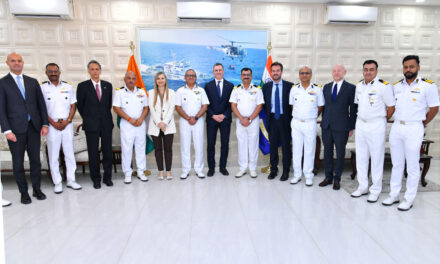
The protocol was signed by regional councillor for Labour, Training, University and Research Alessia Rosolen and Fincantieri’s Human Resources and Real Estate director Luciano Sale.
«Fincantieri’s competitiveness depends on the ability to attract, train and enhance people», Sale said. «This Protocol consolidates a strategic collaboration with the Autonomous Region of Friuli Venezia Giulia that allows us to build an integrated system between school, training, business and the local area, developing the skills that shipbuilding will need in the coming years».
The Fincantieri executive added: «Investing in training means investing in innovation and in the future of the local area: the various initiatives are concrete examples of how a shared vision can translate into concrete actions for employment, training and local development».
For councillor Rosolen, «with this protocol, the Friuli Venezia Giulia Region and Fincantieri make a joint commitment to enhancing skills, young people and training in our territory, while at the same time guaranteeing an increasingly innovative future for the Monfalcone shipyard». The councillor recalled that the Region is making available not only instruments relating to labour, training, education, universities and research, but also those provided for under the regional law on social innovation approved in 2025, describing the agreement as «a path based on mutual commitments to provide concrete answers».
Rosolen highlighted that the agreement focuses on training young people, strengthening educational pathways and integrating research and innovation, ensuring the launch from September of a new ITS course built around Fincantieri’s production needs and with national relevance. «We are responding to the training needs of the “Maestri del Mare” and enhancing skills by creating the conditions for young people to build their future here», she said.
The councillor also described Fincantieri as a strategic asset for Friuli Venezia Giulia not only from an industrial standpoint, but also as a driver of skills development, research and innovation in shipbuilding, recalling the strengthening of the Cluster Mare, now extended to other strategic sectors of the regional economy.
The new ITS “Mechatronics & Robotics – Smart Ship” course will be based in the future Fincantieri Learning Center to be built in the former Albergo Operai in Monfalcone, next to the shipyard. It will train highly qualified technicians in mechatronics, robotics, industrial automation, onboard systems, predictive maintenance and cybersecurity, offering opportunities to join the Group also through third-level apprenticeships from the second year. Students will be able to benefit from scholarships linked to ISEE and accommodation support measures for those living away from home.
The qualifying elements of the agreement also include the integration of corporate and public welfare, with initiatives dedicated to work-life balance, social inclusion and support for families. This area also includes “Fincantieri for Community”, the Fincantieri Foundation project that in Monfalcone promotes social and cultural initiatives to strengthen the link between the company, the local area and the community.