

TRIESTE – More investment in shipyards and a new hiring cycle: these are the demands put forward by the sector unions to Fincantieri, in light of the 2026-2030 Industrial Plan.
Fincantieri CEO Pierroberto Folgiero met in Rome with the general secretaries of Fim, Fiom and Uilm and with union coordinators to present the 2026-2030 Industrial Plan. The talks come at a time described as strong growth for the group, both in results and outlook.
According to what was presented to the unions, the operating environment is expanding across all divisions: civil, cruise, defence and underwater, with offshore activities also being strengthened, from special vessels to oil & gas, through to offshore wind, cable layers and icebreakers. The Plan forecasts more than €50 billion in new orders and growth in all financial indicators compared with 2025 projections, alongside the development of the sustainability strategy focused on technological innovation, inclusion, and health and safety.
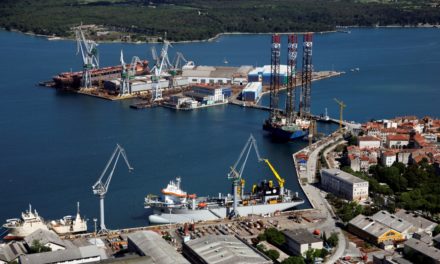
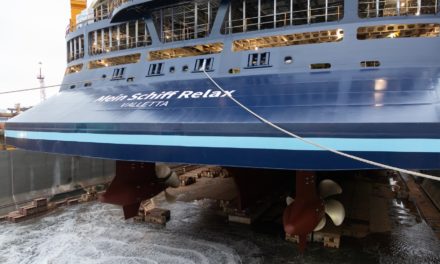
In the cruise segment, the group’s leadership is confirmed, with 34 ships already in the orderbook and deliveries scheduled through to 2036. On the defence front, a doubling of production capacity at Italian yards is planned. In this context, the Castellammare di Stabia yard will be involved in military contracts to handle volumes that the integrated sites of Muggiano and Riva Trigoso would not be able to sustain on their own. At Muggiano, organisational changes are being studied to increase production capacity, and the investment in the new dry dock is confirmed.
The meeting also prompted a clear position from Fiom. Samuele Lodi (Fiom-Cgil national secretary and head of the mobility sector) and Simone Marinelli (Fiom-Cgil national coordinator for Fincantieri) stressed the need to focus efforts on a number of key points: further increasing national production capacity, also considering investments in new shipyards, and unblocking infrastructure works awaited for years, in particular the Castellammare di Stabia dry dock, calling on the Port Authority, the Campania Region and the Government.
Union demands also include relaunching ferry construction in Italian yards, as already happened in Palermo, and a strategy to capture the growing demand for special offshore vessels and cable layers. For Fiom, it is also crucial that growth in the defence sector does not come at the expense of the cruise segment, which remains central in production volumes. A significant point concerns the production and organisational model. The unions are asking for the recent subcontracting protocol to be applied in concrete terms, to improve working conditions and wages for workers employed by subcontractors and to overcome situations of exploitation that are still present. In this framework, closer involvement of the RSU is indicated as decisive, also to manage contract changes, employment continuity, and housing and citizenship issues.
Finally, Fiom reiterates that a workload of this scale must translate into an extraordinary investment in direct employment. After the return to hiring production workers with the “Maestri del mare” project, the unions believe that all the conditions are now in place to accelerate and broaden this experience, focusing on new hires in the yards.