

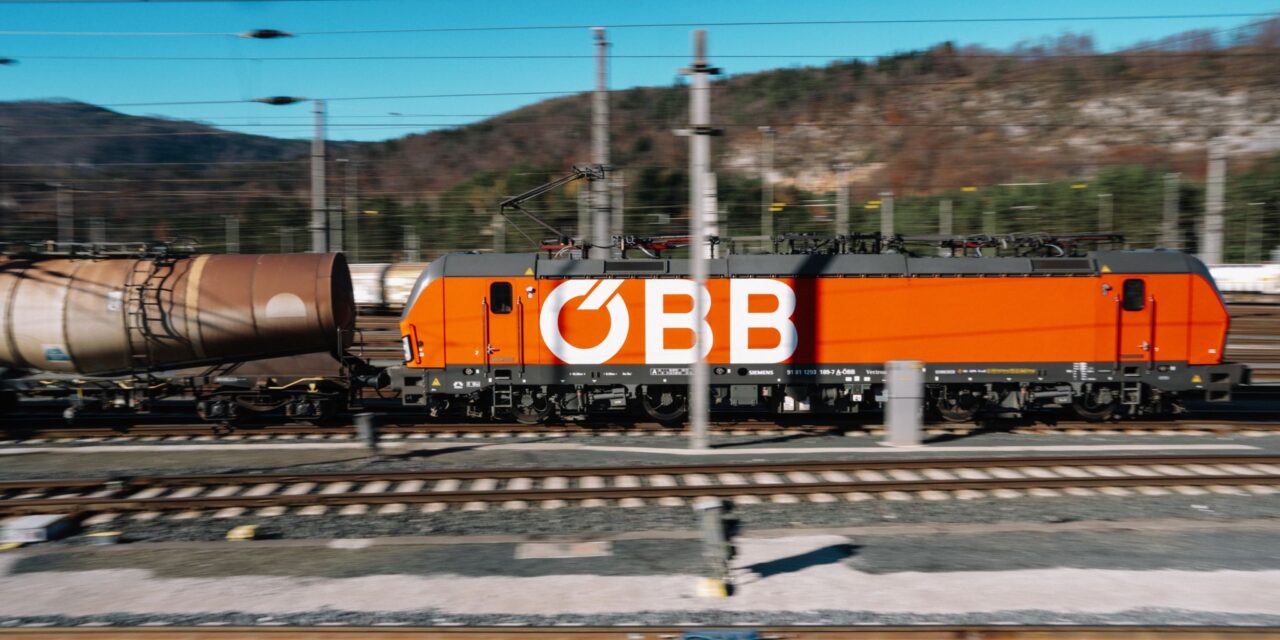
TRIESTE – Just weeks before the launch of passenger services, freight trains are already operating on the new Koralmbahn section, anticipating the benefits of a link designed to reshape logistics in southern Austria.
Starting freight traffic immediately allows the infrastructure to be tested under real operating conditions while offering companies a faster connection between Villach South and Graz. The route — which until now required a long detour via Knittelfeld, Leoben and Frohnleiten — is now reduced to two-thirds of the previous distance, with travel times cut by half. It marks a significant shift in a region where every hour saved has a direct impact on the competitiveness of flows towards the Adriatic.
The almost flat profile of the new line makes it possible to run heavier trains with a single locomotive. Many services that previously required double traction can now operate with one engine, increasing payload by 15–20% and reducing fuel consumption, staffing requirements and turnaround times. According to forecasts, the new layout will result in annual savings of around 300,000 train-kilometres, a substantial cut especially for operators managing regular services along the southern corridor.
Shifting part of the traffic to the new infrastructure frees up capacity on the historic line and improves flow management at key nodes. With the Koralpe tunnel fully integrated into the Baltic–Adriatic axis, the entire corridor gains an estimated 30% increase in total capacity for freight and passengers. This extra room helps accommodate more trains, ease congestion and schedule more regular services, both within Austria and towards the North Adriatic ports (Trieste, Koper, Rijeka).
The early start for freight services also brings a symbolic link to history: two centuries ago it was freight that inaugurated the European railway era. Today, the new Koralmbahn follows the same path, placing operational continuity and the needs of logistics chains at the centre. Ahead of December, when passenger services begin, the freight sector can already rely on a faster, more efficient infrastructure with wider margins for developing traffic towards Italy and Central Europe.