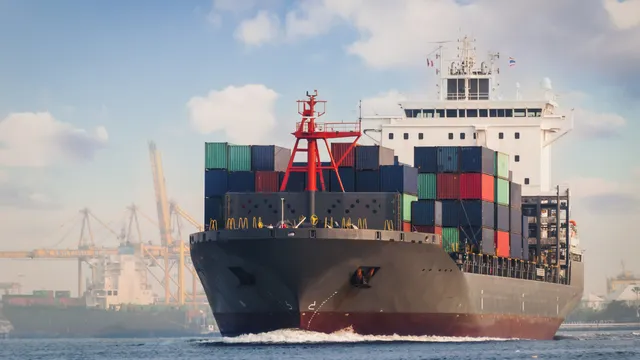


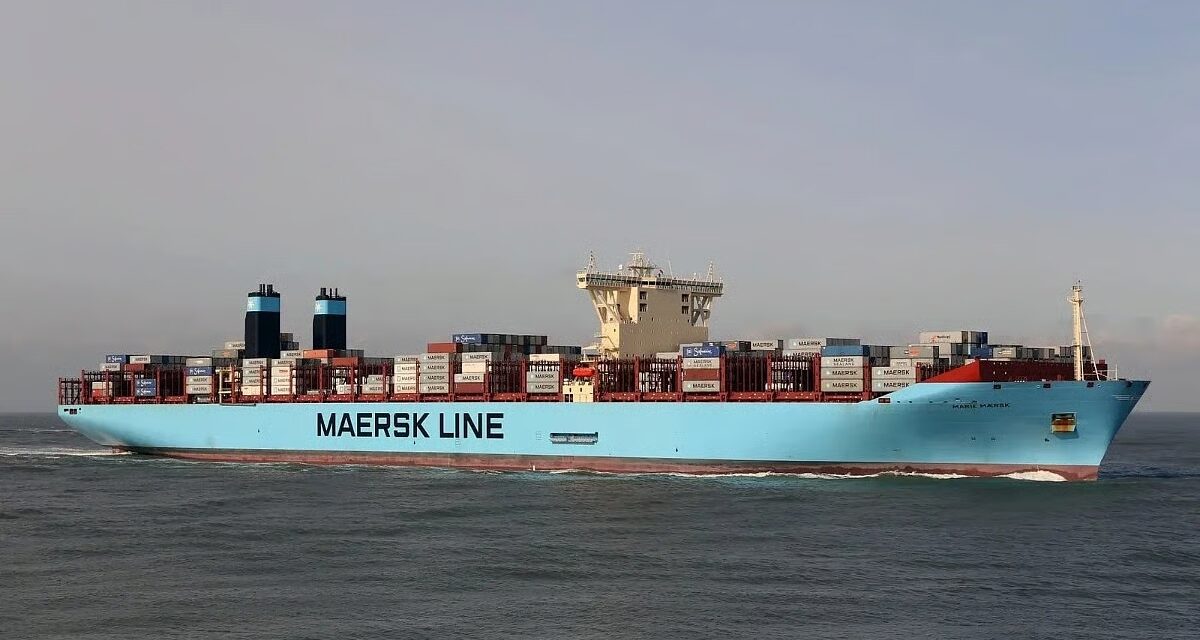
TRIESTE – It seemed settled: this morning the Suez Canal Authority announced that Maersk’s containerships would return as early as the beginning of December, claiming the existence of a new strategic agreement. Only a few hours later, the Danish carrier issued a denial, clarifying that it has set no date for resuming transits and that any decision will depend solely on a stable improvement in security in the Red Sea and at Bab el-Mandeb.
At the press conference, the Authority portrayed the moment as a turning point: Chairman Osama Rabie spoke of months of negotiations, of a “full resumption of the Maersk fleet,” and of a completed plan to restore traffic through the canal. He also highlighted the infrastructure’s resilience despite the collapse in revenues in 2024, and even mentioned CMA CGM as the next carrier ready to return.
The picture changed quickly. A Maersk spokesperson stated that there is no operational commitment or timeline: for now the group’s vessels continue to sail around Africa, as they have since late 2024 in response to the Houthi attacks in the Red Sea. During the same event, CEO Vincent Clerc had already signalled caution: the company is assessing the recent positive signals following the Gaza truce and diplomatic efforts, but with no defined timeframe.
Egypt’s pressure to restore traffic remains strong: the canal handles around 12% of global trade and, after the collapse in transits, Cairo has revised tariffs, introduced incentives, and shortened operational times. The industrial ties with Maersk are significant as well: APM Terminals has just inaugurated a $500-million expansion of the Suez Canal Container Terminal, bringing its capacity to 7 million TEU.
Despite diplomatic efforts and an increasingly close industrial relationship with Egypt, Maersk’s central concern remains the safety of its crews. CEO Vincent Clerc, while acknowledging “significant progress” in the stabilisation process in Gaza and the Bab el-Mandeb strait, made it clear that a return to the East–West route via the Red Sea will only occur when conditions are genuinely safe. The company will resume using the canal «as soon as it is safe to do so», he said, reiterating that crew protection remains the absolute priority.