

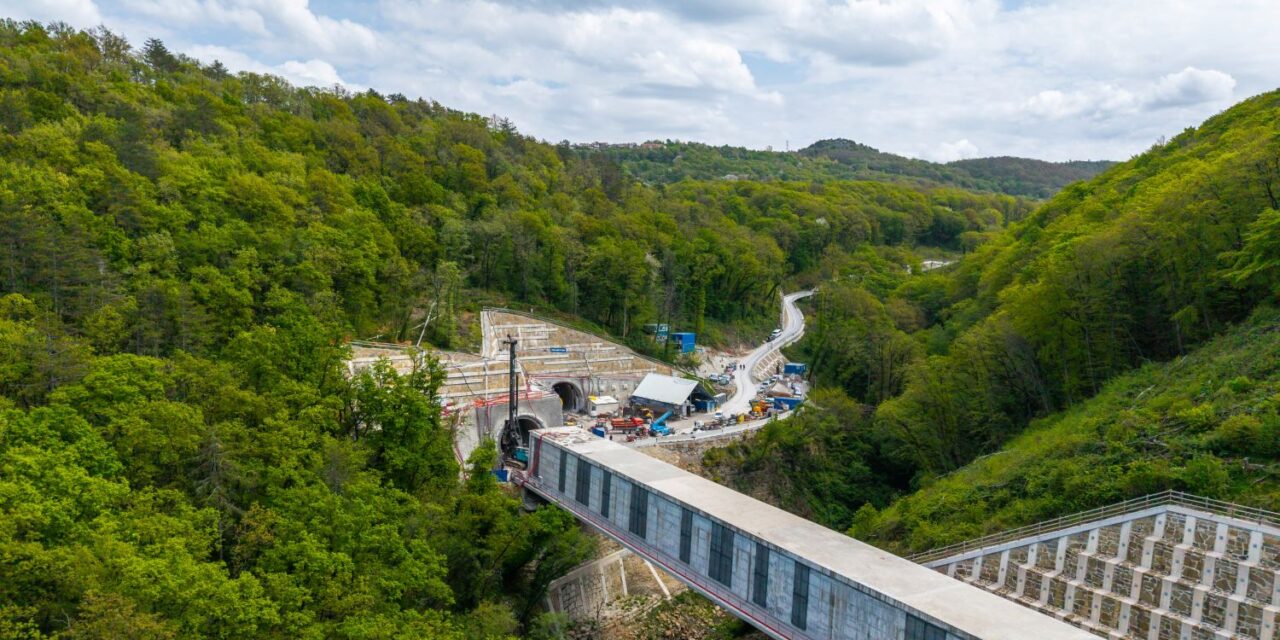
TRIESTE – The European Climate, Infrastructure and Environment Executive Agency (CINEA) has allocated an additional €156 million in non-repayable funding for the new railway linking the Port of Koper to the Divaca hub.
The newly secured funds – as explained in a statement by 2TDK, the state-owned company in charge of the project – confirm that the railway continues to be considered one of Europe’s key infrastructure projects and a model of best practice in major project execution. The funding specifically targets Lot 3, which includes the main railway structure and support technologies, as well as co-financing for the implementation of the European Rail Traffic Management System (ERTMS), which ensures interoperability, increased safety, and improved efficiency.
The €156 million were granted under the Connecting Europe Facility (CEF), the EU’s key funding instrument to support growth, jobs, and competitiveness through targeted investments in transport, energy, and digital services at the European level.
With this latest award, the total amount of non-repayable EU funding granted to the project rises to €390 million. Considering the project’s overall cost, which exceeds €1.1 billion, EU contributions now account for approximately 35%.
“These funds represent a major boost to the second track project. European support,” said Matej Oset, CEO of 2TDK, “confirms that this is a strategic infrastructure for Slovenia and the wider region. I thank everyone who worked on the application and ensured all criteria were met. We move forward with a clear focus on quality and meeting our targets.”
“This funding is not just financial support—it’s a significant recognition. Europe considers this project a best-practice example in the field of sustainable infrastructure and cross-border connectivity. This confirms,” added Marko Brezigar, Director of 2TDK, “that we are following high standards in design, implementation, and project management. This trust motivates us to move forward with commitment, staying true to the principles of efficiency, transparency, and long-term sustainable mobility.”