

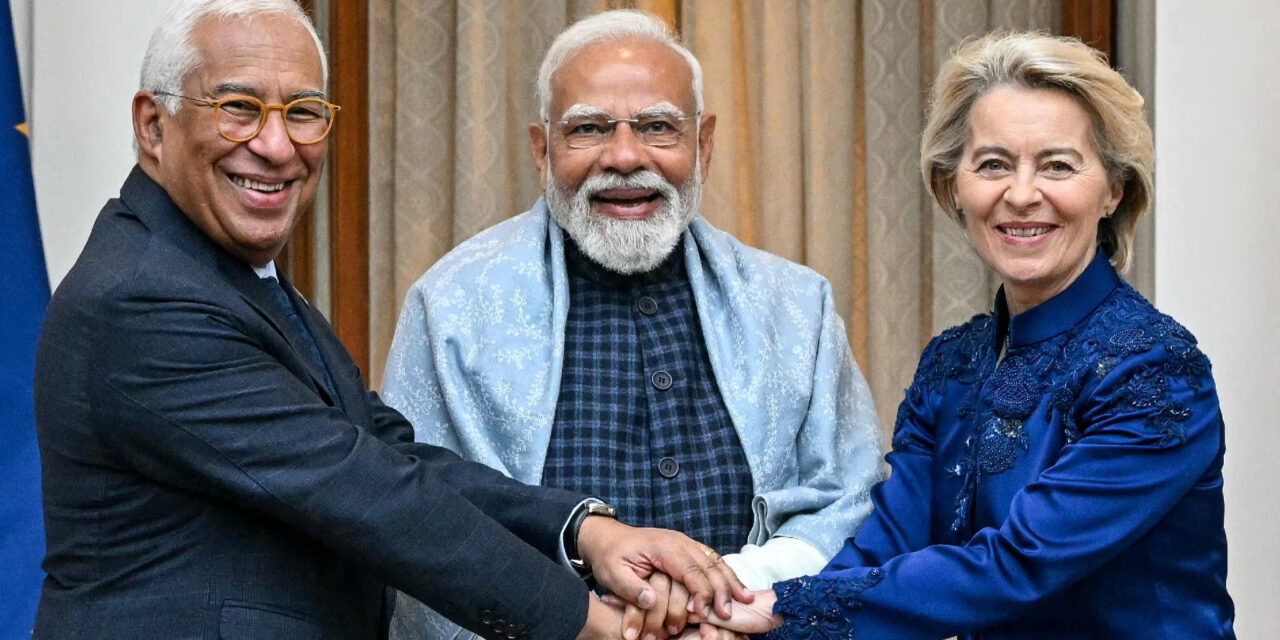
TRIESTE – The European Union and India have concluded negotiations on a free trade agreement described as historic, the most far-reaching ever reached by both sides.
The deal strengthens economic and political ties between two of the world’s major economies and aims to support an open trading system based on shared rules. Underlining its significance was European Commission President Ursula von der Leyen, who described it as a partnership set to grow over time.
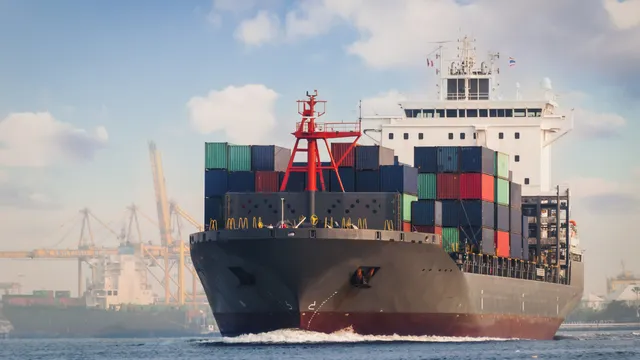
On the geopolitical and logistics front, the EU–India agreement reinforces the case for the IMEC Corridor, aimed at linking India, the Middle East and Europe through ports, railways and energy infrastructure. Trade liberalisation improves the economic sustainability of this alternative route and accelerates the need for efficient, well-connected European hubs.
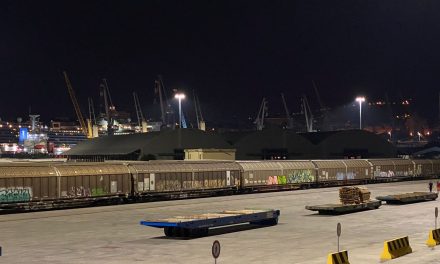
In this context, the Port of Trieste confirms itself as one of the natural gateways to the European market. Its outlook towards Central Europe, international rail connections and free-port regime make it particularly well placed to capture the trade flows generated by the deal with India and by the development of the IMEC Corridor.
Today, the EU and India exchange goods and services worth over 180 billion euros a year. The agreement is expected to double EU exports to India by 2032, thanks to the elimination or reduction of duties on more than 96% of exported goods. For India, it represents the broadest market opening ever granted to a partner.
Tariff reductions cover key sectors such as automotive, machinery, chemicals and pharmaceuticals, as well as agri-food, with significant cuts on duties for wine, olive oil and processed products. The agreement also includes dedicated tools for small and medium-sized enterprises, designed to facilitate access to the Indian market and reduce regulatory barriers.
A key chapter concerns services, including financial services and maritime transport, with commitments that go beyond what India has so far granted to other partners. Intellectual property protection is also strengthened, and binding targets are included on environmental sustainability, workers’ rights and climate cooperation, backed by a 500-million-euro EU support package.
The coming months will be dedicated to the signature and ratification procedures, with the agreement requiring approval from the Council and the European Parliament, as well as India’s institutional system. If timelines are met, the deal could enter into force in the next few years, with direct effects on maritime and land trade flows and new opportunities for Northern Adriatic ports, with Trieste first and foremost.