

TRIESTE – The single, multi-year tender worth around €37 million aimed at redesigning Friuli Venezia Giulia’s regional maritime mobility system—making it more stable, integrated and sustainable—was completed on 30 December.
This was announced in a statement by the Friuli Venezia Giulia Region, confirming the conclusion of the award procedure for seasonal public maritime transport services for the 2026–2030 five-year period. The main novelty is the introduction of long-awaited new connections: the activation of the Duino landing and, above all, the direct Trieste–Grado–Lignano service with no transfers, which will cover the full coastal route in less than two and a half hours of sailing, offering a concrete alternative to travelling by car.
“With this tender, the Friuli Venezia Giulia Region takes an important step towards a more modern, integrated and sustainable mobility system,” said Cristina Amirante, Regional Councillor for Infrastructure and Territory, in the statement. “For the first time, seasonal services are awarded through a single, multi-year procedure, overcoming fragmented management and providing stability to the system.” The call is divided into two lots.
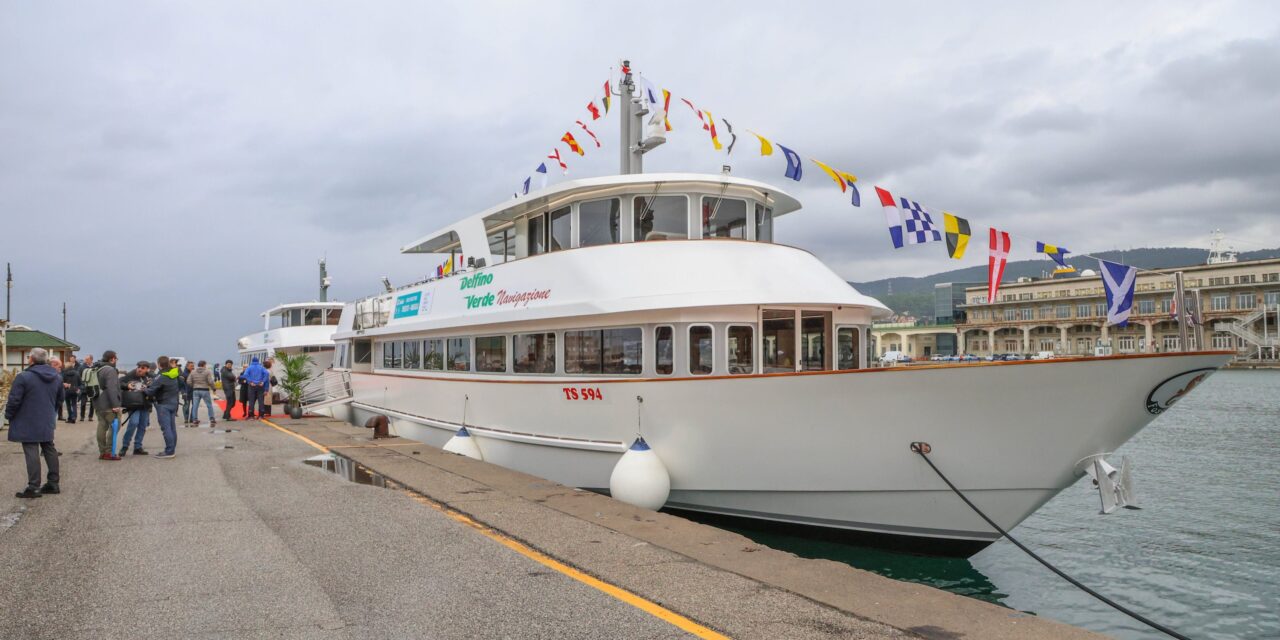
The first lot, covering coastal maritime services (Trieste–Barcola–Grignano–Sistiana, Trieste–Sistiana–Duino–Monfalcone and Trieste–Grado–Lignano lines), was awarded to Delfino Verde Navigazione S.r.l. of Trieste. The second lot, dedicated to lagoon services on the Aquileia–Grado, Marano–Lignano and Lignano–Grado routes, was awarded to the consortium formed by Saturno and Santa Maria S.a.S. In addition to the new routes, the first lot strengthens departures from Trieste and introduces the Porto Vivo and Topolini stops on request, responding to user demand and with a particular focus on cycle tourists. The second lot aims to enhance the lagoon system, also through high-value natural itineraries—such as the Lignano–Grado connection via Porto Buso—and improved timetable integration. On accessibility and intermodality, the Region states that the service will be fully usable by people with reduced mobility and coordinated with the regional cycle network, in particular the Trieste–Lignano–Venice and Alpe Adria routes.
Fares for residents will remain unchanged compared to 2025, while dedicated pricing will be introduced for non-residents, in line with major European tourist destinations. For the 2026 season, services will operate—between late April and early October—across the various coastal and lagoon lines, with additional time extensions foreseen in the improved offers submitted in the tender. “The outcome of the tender enhances skills present in the area and allows us to look with confidence at the continuity and quality of a service that is fundamental for tourism development and the cohesion of coastal communities,” Amirante concluded, stressing that the new set-up strengthens Friuli Venezia Giulia’s maritime identity and the centrality of sustainable mobility in regional policies.