

TRIESTE – The Veneto Regional Administrative Court has partially upheld Duferco Engineering’s appeal against its exclusion from the second phase of the ideas competition to identify new offshore berthing points for large ships and container vessels in Venice.
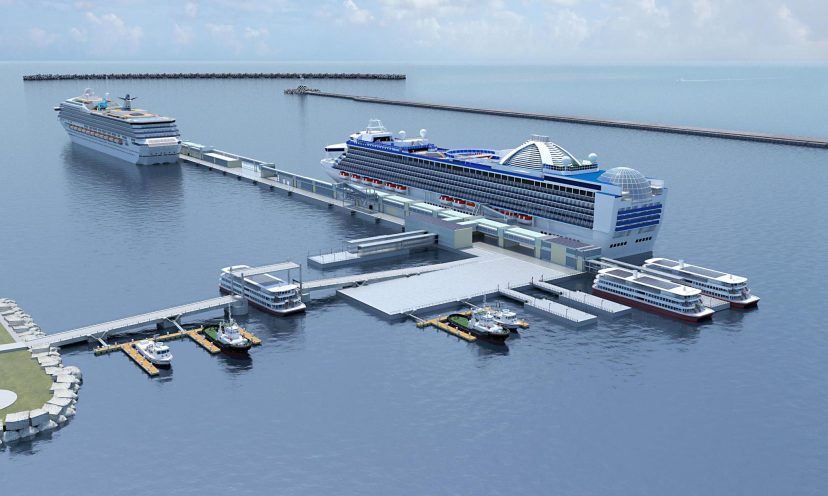
The case concerns the competition promoted by the Port System Authority of the Northern Adriatic Sea to identify alternative design solutions to the transit of large ships through the Venice lagoon. Among the proposals submitted was also that of Duferco Engineering, based on the evolution of the “Venis Cruise 2.0” project.
At the end of the first selection phase, the judging committee assessed nine projects. Only one exceeded the minimum threshold set out in the tender, while all the other proposals remained below the limit required to access the second phase. For this reason, only one competitor was admitted. Duferco challenged two main aspects. On the one hand, it argued that a procedure designed to compare several solutions could not continue with just one project. On the other, it complained that it had not been put in a position to understand the reasons for its exclusion, since the Port Authority had merely communicated its non-admission without indicating the score obtained or the reasons for the assessment.
On this latter point, the court sided only partially with the company. The judges in fact rejected the argument that the tender should have been stopped. According to the ruling, the rules clearly provided for a minimum quality threshold and the committee could not admit to the second phase projects that had not reached that level. The fact that only one proposal exceeded the threshold therefore does not make the continuation of the procedure unlawful.
The court instead upheld the objection concerning the reasons given for the exclusion. According to the judges, Duferco was never put in a position to understand what its score was and, above all, which technical assessments had led the committee to judge the project insufficient. The minutes contained only numerical tables and very brief judgements, without an actual explanation of the reasons that had led to the failure to reach the minimum threshold.
For the court, in a procedure of this kind it is not sufficient to rely solely on a numerical score when the assessment criteria concern complex aspects such as port engineering, the functionality of the work, architectural integration and construction costs. The committee should have recorded, at least in summary form, the technical reasons for the judgement expressed for each criterion.
The practical consequence of the ruling is that the Port Authority will have to re-examine Duferco’s proposal and issue a new assessment with adequate reasoning. This does not mean automatic admission to the second phase, but a reassessment that must clearly explain why the project does or does not deserve to exceed the threshold set by the tender. Only if, at the end of this new assessment, Duferco’s proposal is found to be admissible will the Port Authority have to take the resulting decisions on the continuation of the procedure.
In essence, the court does not question the Venice offshore competition or the fact that only one project had remained in the running. Instead, the ruling criticises the way Duferco’s exclusion was justified, holding that a competitor has the right to know and understand the technical reasons that led to its proposal being rejected.