

TRIESTE – The Luka Rijeka Group, which operates the Port of Rijeka, closed the first nine months of 2025 with growth in container traffic, a decline in overall volumes but higher financial profits and a robust operational development plan.
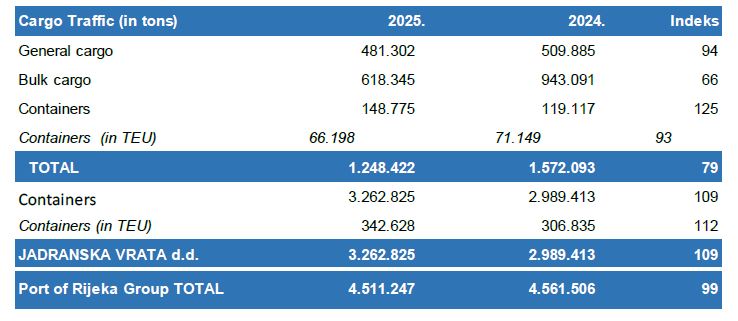
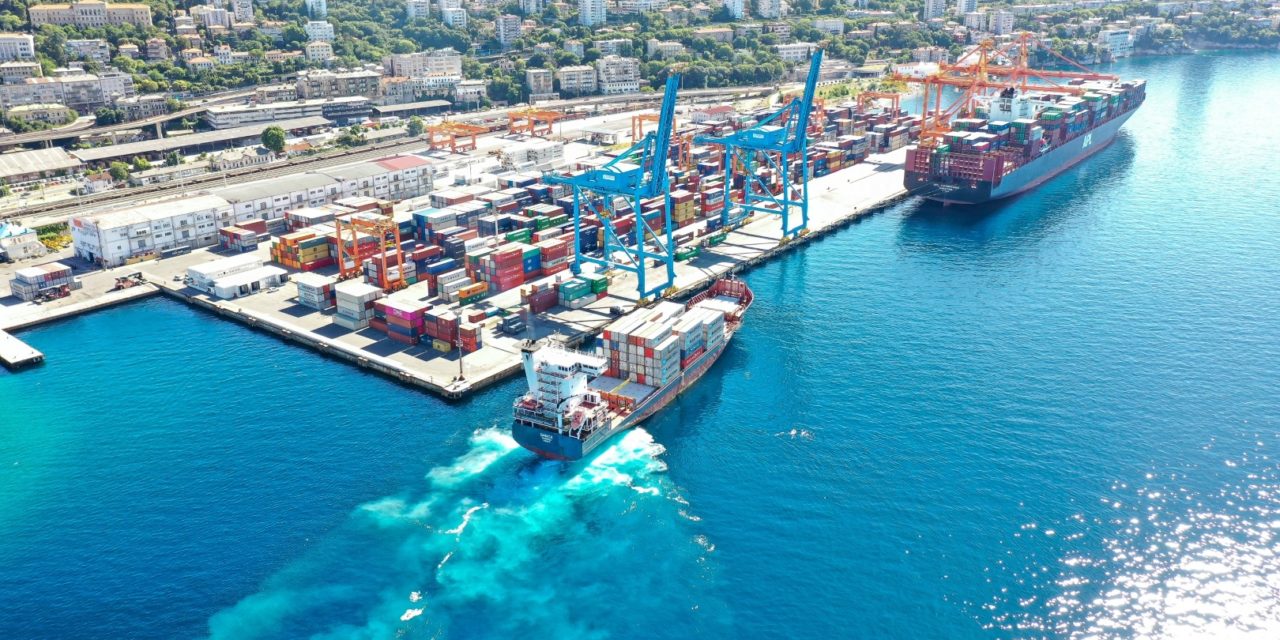
Between January and September 2025, Luka Rijeka handled 4.5 million tonnes of cargo, down 1% compared to the same period in 2024. The trend is mainly affected by the drop in bulk and general cargo, while container operations remain the main driver thanks to the subsidiary Jadranska Vrata (Braidica terminal operated by Adriatic Gate Container Terminal).
With 342,628 Teu, container traffic is up 12%.
General cargo, which accounts for 11% of volumes, fell by 6% due to weaker steel products linked to lower European production and reduced exports, as well as shrinking refrigerated cargo. Livestock movements came to a temporary halt after foot-and-mouth disease cases in Hungary and Croatia’s import ban between April and June. The second and third quarters saw the first volumes of vehicles handled.
Bulk cargo dropped 34% from 2024: grain, coal and scrap all declined. Grain reflects low prices and rerouted flows; coal is down due to reduced steel mill output; scrap is affected by lower prices in destination markets.
Service revenues reached €19.3 million, down 8% from 2024 due to lower volumes across all weaker categories. Operating costs remained stable at €21.6 million: material expenses fell by 11%, while personnel costs rose by 4%. Operating profit reached €7.1 million, up 13% on 2024, supported by €4.9 million in dividends from Jadranska Vrata and a significant improvement in liquidity.
On the investment side, work continues on the expansion of the Škrljevo container depot, a €5.7 million project that includes new operational areas and the possibility of expanding full-container services. In the first three quarters of the year, works worth €2.9 million were completed, following €1.39 million in 2024.
In Bakar, a quay crane was replaced with a refurbished unit transferred from Split and operational since May. A second used crane, already purchased, will arrive by the end of 2025. New sanitary modules were installed in Bršica, and new forklifts, mooring vehicles and maintenance equipment have been ordered.
The group notes the indirect effects of the war in Ukraine, which has altered routes, energy prices and food markets, impacting operating costs. Added to this is the Red Sea crisis, which pushed many carriers to reroute via the Cape of Good Hope, increasing sailing times and freight rates.