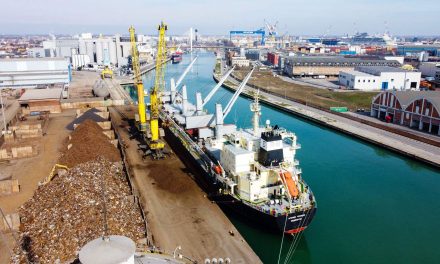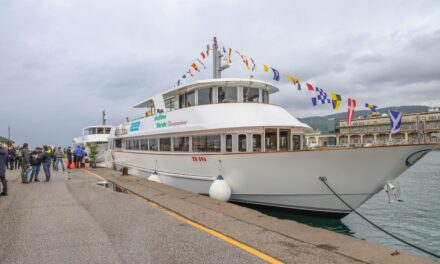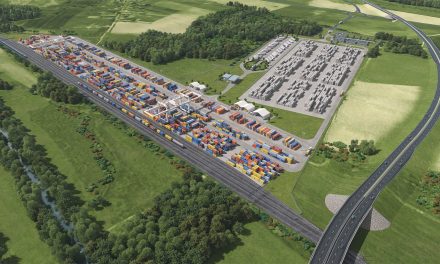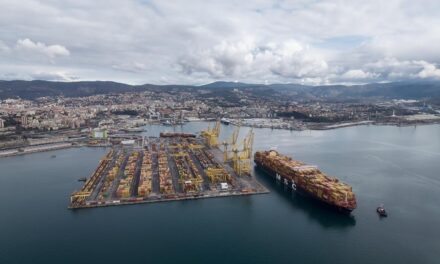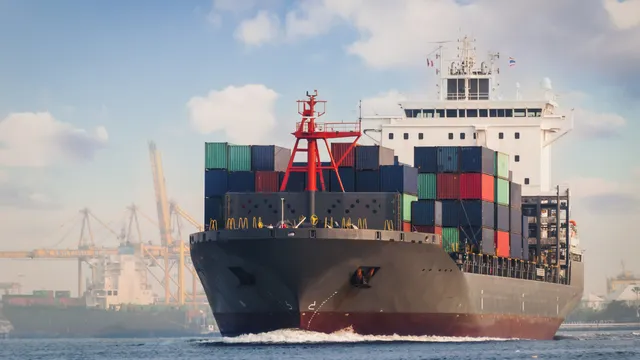


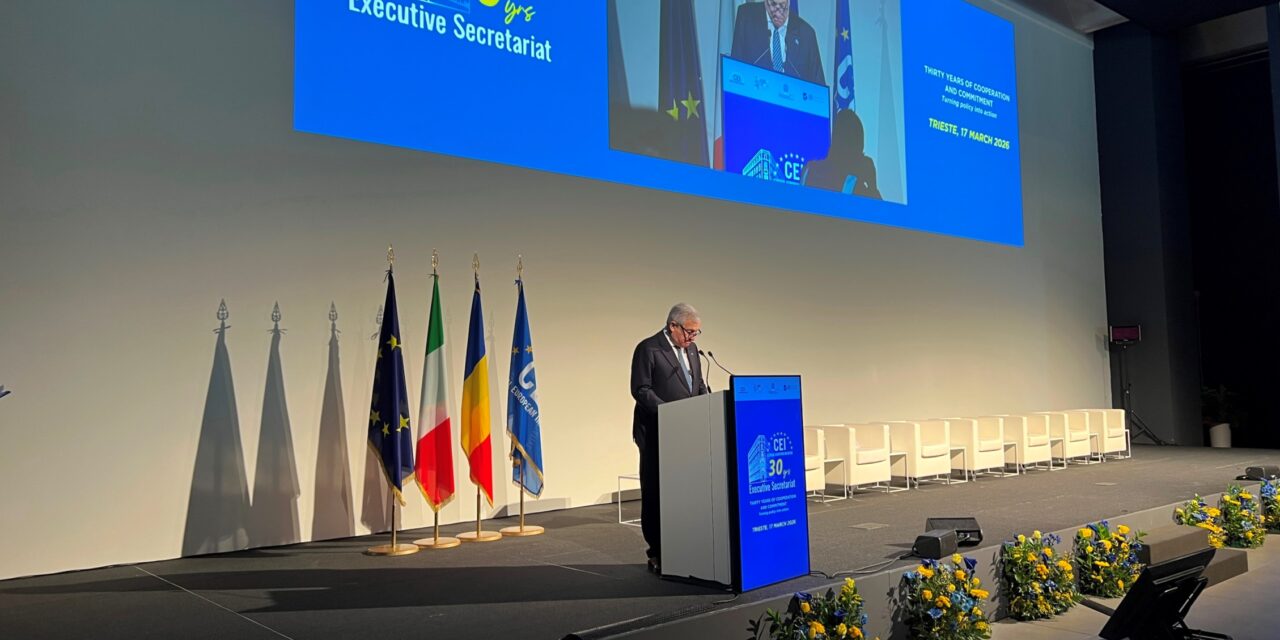
TRIESTE – The India–Middle East–Europe Corridor (IMEC) is moving into the operational debate with a double event at Warehouse 26 in the Old Port: the Forum dedicated to businesses and the summit marking the 30th anniversary of the CEI. At the centre is Trieste’s role as a hub for the new global routes linking the Indo-Pacific, the Gulf and Europe.
The Deputy Prime Minister and Foreign Minister, Antonio Tajani, described the project as a direct response to geopolitical criticalities, citing the tensions in the Strait of Hormuz and the risks along traditional routes. According to Tajani, an alternative infrastructure would reduce dependence on choke points such as Suez and the Red Sea, with significant effects for a country like Italy, where exports account for 40% of GDP.
IMEC envisages an integrated logistics chain between India, the Arabian Peninsula and the Mediterranean, with an estimated potential of 172 billion euros in trade flows, of which around 26 billion euros for Italy. In this framework, the northern Adriatic and the Balkan area take on a hinge role between the Mediterranean and central Europe.
The president of the Friuli Venezia Giulia Region, Massimiliano Fedriga, underlined the project’s geopolitical dimension. The aim is to avoid the marginalisation of the Mediterranean in the new global routes and to strengthen the role of the CEI area countries as an integrated platform towards Europe. The prospect is that of a broader infrastructure network capable of linking the Adriatic, the Black Sea and the Baltic.
On the diplomatic front, Ambassador Francesco Maria Talò reiterated Trieste’s candidacy as the European node of the corridor, highlighting the port’s geographical advantage as the northernmost in the Mediterranean, together with its direct connections to Germany, central Europe and the Balkans.
The project is part of a broader context of infrastructure and cooperation initiatives. These include the Three Seas Initiative, Corridor VIII between the Adriatic and the Balkans, the Trieste-Belgrade railway line and the strengthening of energy links, such as the electricity cable with Montenegro. Through the CEI-EBRD Fund, technical interventions have already been financed, particularly in countries թեկնած candidate for accession to the European Union.
The Forum brought together more than 300 delegates from businesses and institutions active in logistics, infrastructure, energy and digital connectivity. The objective is to turn the corridor’s strategic vision into concrete projects, industrial partnerships and investments along the value chain between India, the Middle East and Europe.
On the industrial side, the growing role of international operators already present in Trieste is emerging. Philip Sweens, CEO of HHLA International, explained that the investment in the Julian port responds to a structural trend: over the next few years, Mediterranean growth could outpace that of northern Europe, with volumes shifting southwards for reasons of time and cost. According to HHLA, the logistics and intermodal ecosystem developed around the port, enabling efficient handling operations, is also decisive.
Sweens also highlighted the issue of governance: investments are based on collaboration between institutions, operators and the financial system, as well as on a clear direction in infrastructure development. At European level, however, there remains a need to simplify administrative processes.
Along the same lines, Péter Garai of Adria Port (the Hungarian investment in the southern part of the port of Trieste) indicated maritime logistics as the starting point for strengthening connectivity between Europe and India. Over the last ten years, trade relations between the two markets have grown, as have those with the Middle East. In this scenario, IMEC represents a natural evolution and Trieste one of the most coherent nodes for infrastructure and logistics development.