


TRIESTE – A maritime link between Trieste and Bari is back at the centre of debate after the disruption to traffic caused by the landslide in Molise.
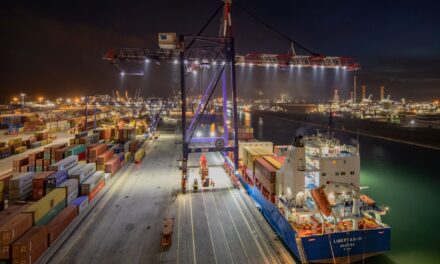
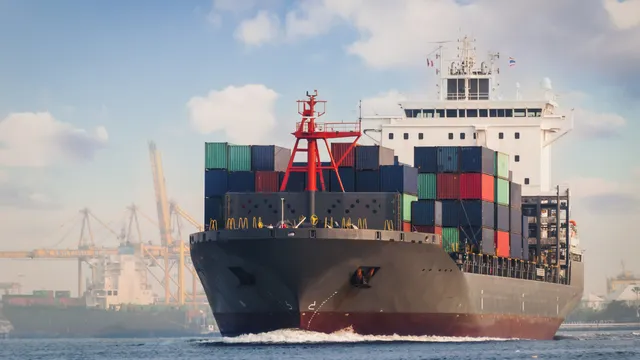
The idea was relaunched by Michelangelo Agrusti – president of Confindustria Nord Adriatico – during an interview with Tgr Rai Friuli Venezia Giulia, on the sidelines of a regional Confindustria meeting. The aim is to shift part of freight flows from road to sea, using the port of Trieste as a starting point to connect the North with Apulia and central Italy.
According to Agrusti, the infrastructure criticality that emerged in Molise highlighted the fragility of land connections along the Adriatic corridor. For this reason Confindustria, together with Apulian representatives and the national delegate for logistics, is working on an experimental solution based on the Motorways of the Sea. The proposal is also attracting attention among port operators. Enrico Samer has assessed the technical sustainability of the route: between Trieste and Bari there are around 323 nautical miles, which can be covered in about 17 hours at a commercial speed of 19 knots. This is longer than by road, but with potentially lower costs thanks to the transport of the semi-trailer only, without the tractor unit.
The operational hypothesis would involve two weekly rotations and, from a technical standpoint, vessel availability would not be a constraint. The main issue remains demand: for the line to work, it must guarantee regular loads in both directions, avoiding empty sailings that would undermine its economic balance.
Similar experiences already exist. On the Venice-Bari route, for example, Autamarocchi moves around 400 semi-trailers a month in cooperation with Grimaldi Lines, showing that the model can hold up when adequate volumes are in place.
On the institutional side, the president of the Port System Authority of the Eastern Adriatic Sea, Marco Consalvo, urges caution: before launching the service, a concrete market assessment is needed, involving logistics operators and potential customers, including international ones. Trieste is indicated as a strategic node for this type of traffic, thanks to its projection towards the markets of central and eastern Europe. But the feasibility of the line will depend on the ability to aggregate stable demand along the entire logistics chain.