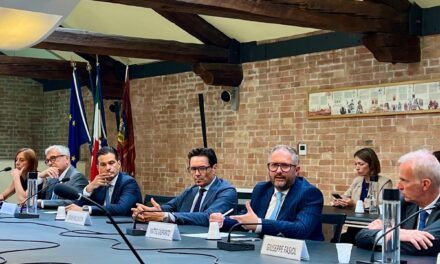


TRIESTE – A meeting between the top management of Adria Port, the Hungarian company behind the new multipurpose terminal project at the Port of Trieste, and customs experts was held to assess the feasibility of a Trieste–Budapest Corridor.
The meeting was attended by Franco Letrari (Regional Directorate of Customs for Veneto and Friuli Venezia Giulia) and Péter Garai, CEO of Adria Port, a company under Hungarian law. Also present was Kristóf Péter Bakai, Deputy Commissioner for Customs and International Affairs of the Hungarian State.
The initiative stemmed from the need to discuss the project’s customs aspects – for which the quay construction works are being carried out by the Port Authority – but above all to examine the opportunities offered by Trieste’s Free Port status, as well as the challenges linked to creating a customs corridor between Trieste and Budapest.
The discussion is part of the ongoing Italy–Hungary dialogue, which, according to the participants’ social media posts, “is growing stronger, whether in e-commerce, data exchange, or joint action against fraud.”
“The visit to Trieste was once again a reminder of the key role that Adriatic ports play in ensuring the security and efficiency of Hungary’s supply chain,” they noted.
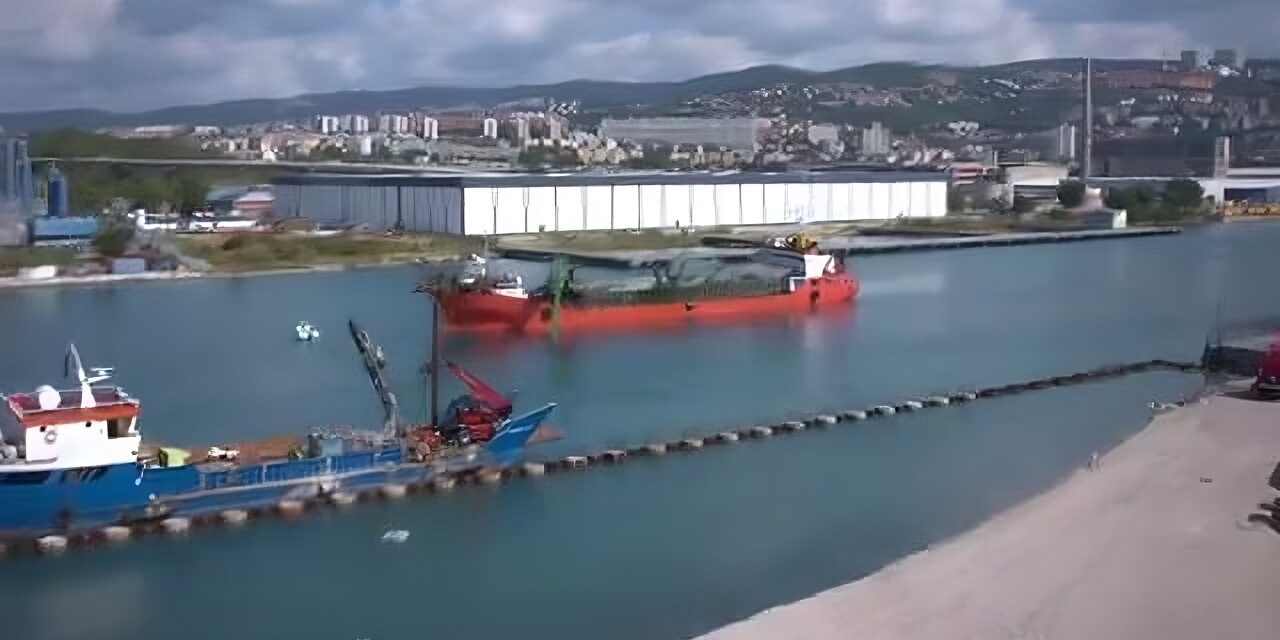
Adria Port is a joint-stock company 100% owned by the Hungarian State. The company is responsible for developing a new terminal in the area of the former Aquila refinery, in the municipality of Muggia (Trieste), with the aim of promoting Hungary’s foreign trade and developing logistics chains to support the Hungarian economy.
Quay construction works, carried out by the Port System Authority, began in April. The total estimated investment amounts to €206.4 million, of which about €48.9 million concern the concession area and €157.5 million the private area.
The Authority has recently approved some changes to the original project, resulting in a reduction of the total concession area from 63,203 to 60,520 square meters. Specifically, the updated plan includes a 1,056-square-meter warehouse, an open area of 59,063 square meters, and a 401-square-meter state-owned building (appurtenance).