


TRIESTE – The new logistics connection between the Volkswagen plant in Bratislava and Chinese ports is now operational, with Venice serving as the European export hub.
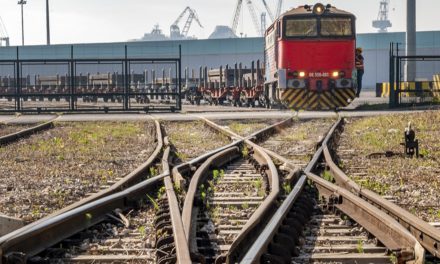
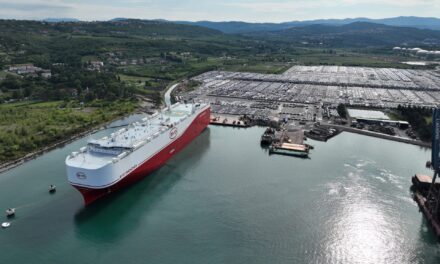
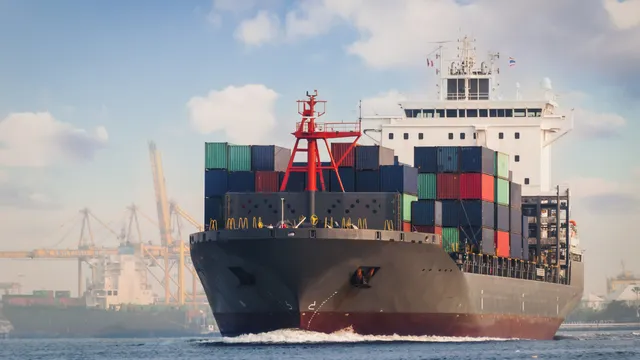
The first regular service departed from the Tencara terminal in Porto Marghera, marking an important step in reviving the lagoon port’s automotive traffic. Cars produced at the Bratislava plant are transported by rail to the end of the South Industrial Canal, where they are stored and loaded onto Glovis and Cosco vessels bound for China.
The service will initially operate every two weeks, increasing to weekly sailings from January 2026, with around 20 trains arriving each week. Once fully operational, traffic is expected to reach around 100,000 vehicles per year, more than 90% moved by rail, delivering major environmental benefits in terms of CO₂ reduction. The average transit time between Venice and the Far East will be about 30 days.
The initiative also highlights the full redevelopment of an industrial area, made possible by the activation of Porto Marghera’s Simplified Logistics Zone (ZLS), which has streamlined authorization procedures and attracted new investments. The terminal has built a new 300-metre quay and over 27 hectares of yard space, ensuring efficiency and capacity for large vessels and integrated ship-to-rail operations.
«The result achieved today confirms the potential of the Port of Venice,» said Matteo Gasparato, Special Commissioner of the North Adriatic Sea Port Authority. «The ZLS is a strategic lever to attract investment and foster new economic opportunities. We now need full synergy between the port and Veneto’s inland terminals to strengthen Venice’s role as a European logistics hub».
Peter Hörndlein, Head of Vehicle Logistics at Volkswagen Group Logistics, emphasized that the choice of Venice aligns with both environmental and commercial goals: «For us, Venice is a strategic port that connects Central European production with Asia while reducing transit times and environmental impact. I would like to thank all partners who made this project possible – an idea that today becomes reality».