

VENEZIA – The global boating industry is worth around €54 billion, with the United States alone accounting for 44% of the global market. Italy, despite its internationally recognised shipbuilding know-how, ranks 14th with a 1.8% share. Within this landscape, sailing accounts for just 9% and is in a phase of gradual downsizing.
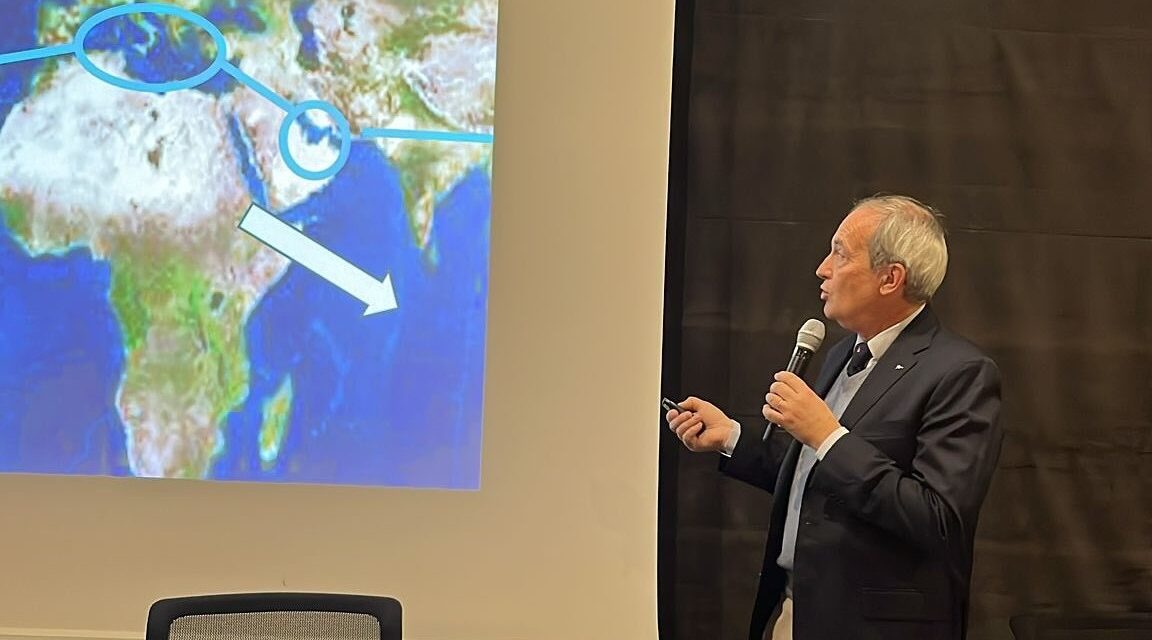
These figures are the starting point for the reflections of Carlo Nuvolari, co-founder together with Dan Lenard of one of the world’s leading megayacht design studios, based in the Venetian area. Speaking a few days ago at the Compagnia della Vela di Venezia, Nuvolari offered a clear-eyed—at times critical—reading of the sector’s evolution, focusing on what he describes as genuine “private-use ships”.
«Today we’re seeing a certain gigantism – he explained – although not all large boats fall into this category. Megayachts are the extreme end: units over one hundred metres in length, with costs that can reach €400 million, generally owned by major international tycoons».
To support his points, the engineer showed images of some iconic projects by the Nuvolari Lenard studio, such as the “Nord”, flying the Russian flag, the “Bravo Eugenia” and the “Black Pearl”, described by Nuvolari himself as «a mega sailing ship as big as the Amerigo Vespucci».
According to the designer, today’s megayacht market contains an obvious paradox: «The purchase is no longer driven primarily by a love of sailing, except for a small minority of owners. What prevails instead are needs for privacy and for representing one’s power on a global scale». A concept that also shapes how these vessels are used. These ships are strategically moved and made visible in major international hubs, from New York to London, as status symbols. It is a projection of one’s own magnitude, recalling dynamics of the past, when state yachts—such as Britannia—sailed the seas more to assert an empire’s image than for pleasure.
A central chapter of the talk addressed sustainability, a theme increasingly present in the boating debate. «Asking whether yachting is sustainable is legitimate, but complex. Sailing itself consumes nothing, but if you consider the entire life cycle of a boat—from production to disposal—the environmental impact remains significant. The sector is making progress, with less polluting propulsion and greater attention to materials, but true sustainability is still a long way off».
In this context, Nuvolari underlined the potential role of the most influential owners, because those with strong media exposure can send messages and steer choices that others may follow.
In closing, a broader look at the market: «From dinghies to megayachts, the sector is worth around €55 billion worldwide. It’s a significant figure, but it shrinks when compared with other industries: just think that the global pet food market alone exceeds €150 billion». In Italy, however, performance is very positive thanks to the shipyards, which work mainly for US owners, now market leaders thanks to their financial capacity and to a system of coastlines and inland waters that is particularly favourable.